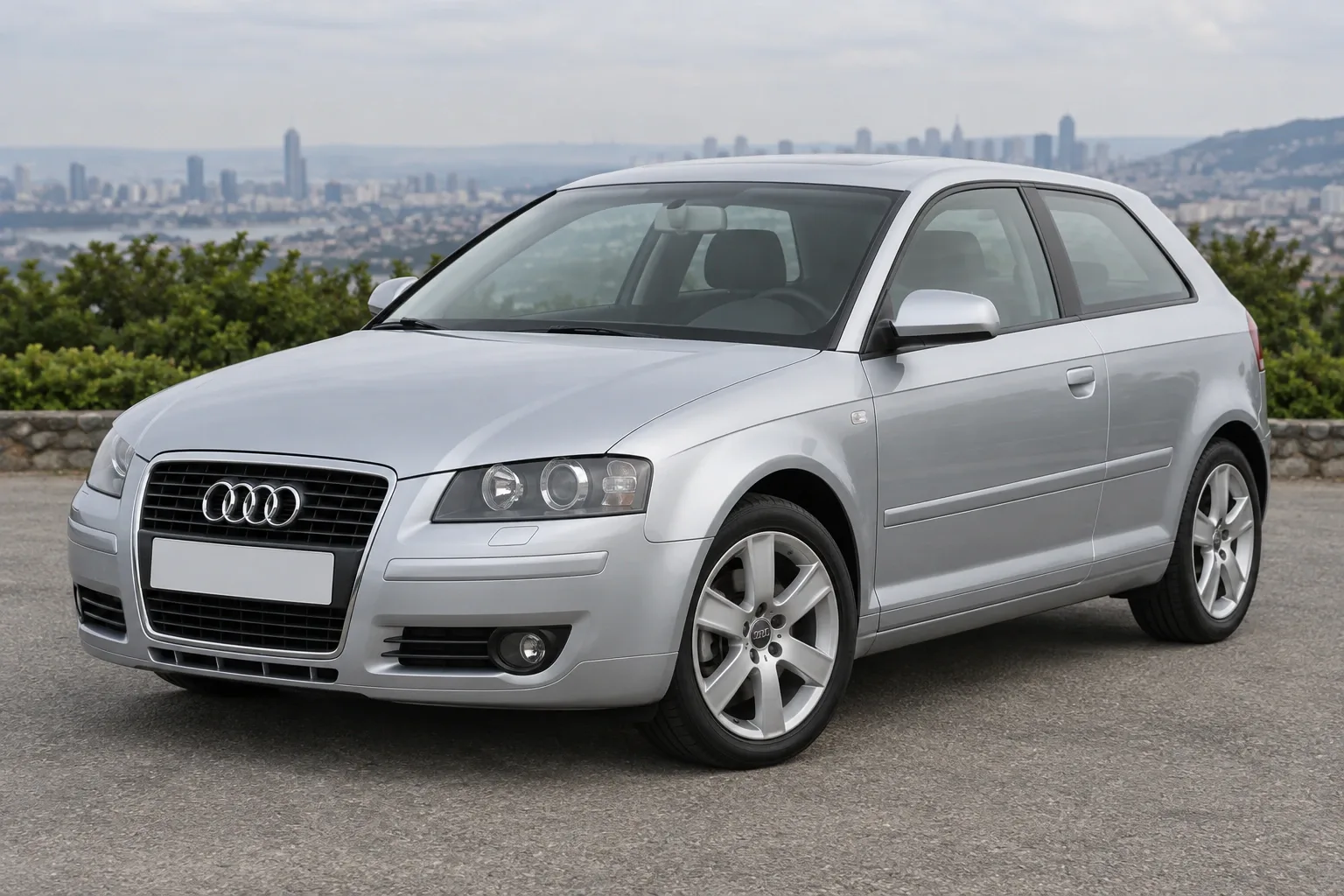
Audi A3 2 / 8P
Audi A3 2/8P rating (2003–2012): condition, documents, inspection and terms of sale of the car.
Indicative purchase price
Below market value
Final price agreed after inspection.
Value my car1Why buyers choose this model
The condition of many Audi A3 leaves much to be desired. This applies, first of all, to the second-generation Audi A3, imported from Western Europe. In most cases, these are cars recovered from an accident, had problems with the engine or operated outside of common sense. After minor repairs and correction of the mileage counter, they got to the Russian automotive market. But this does not mean that finding a car in good condition is impossible – you just need to know a few important points. The Audi A3 II (designation 8P) first appeared on the market in 2003. Therefore, cars of the first years of production, having a mileage of less than 200,000 km, should at least cause suspicion. In the case of older versions, the most viable will be the A3 with gasoline engines, which tend to have low mileage and a low risk of expensive repairs. But if you really want a diesel engine, then you need to choose only 1.9 TDI. Although this turbodiesel is not the first freshness, it does not have problems with cracking the head of the block. A decent diesel Common Rail appeared on cars from Ingolstadt only in 2008.
2What buyers check
Why do you love a compact Audi?
Well, first of all, for prestige. The technical base is the same as the Volkswagen Golf V and Skoda Octavia II, but covered with a grille with four rings. In addition, the “three” is comfortable, quite spacious, and in the version of “Sportback” (wagon) is also functional. The trunk of the 3-door hatchback holds 350 liters, and the 5-door - 370 liters. This is a good indicator in the small family car segment.
Another advantage is the wide range of engines. In the Audi A3 used manual transmissions, “automatic” Tiptronic and robotic DSG. There were also all-wheel drive modifications with a Haldex clutch. Fans of hot hatches will not remain indifferent to the S3 version.
Due to its technical affinity with cheaper Volkswagen models, repairs will not cost much in most cases.
Petrol engines
Gasoline engines 1. 2, 1. 4, 1. 8 and 2. 0 with the addition of TFSI are characterized by common features: turbocharging, direct fuel injection and the timing system chain. Note: the 2.0 TFSI engines with the AXX, BWA, BPY codes used the timing belt, and the chain appeared with the release of the EA888 family in spring 2008. The biggest problem of the 1. 2 and 1. 4 TFSI engines is the tensioner of the timing system chain, which can give up after 30-50 thousand km, which in turn can lead to stretching and jumping the chain. The problem will tell the chirping that appears after starting a cold engine. In addition, in both engines there were cases of destruction of pistons. Fortunately, it is a rather rare disease. The average fuel consumption of both engines is in the range of 7-8 l / 100 km. The 1.8 TFSI engine provides the best performance-to-fuel ratio – 160 hp and 9-10 l/100 km, respectively. There are also problems with the tensioner of the timing system chain, but they occur less often than in the case of weaker motors. 2. 0 TFSI has very good dynamic characteristics, but has problems with the deposition of intake valves. As a result, power drops and fuel consumption increases. Normally, it should be about 11-12 l / 100 km. In earlier versions, there was a failure of the fuel pump and increased oil consumption. Gasoline atmospheric engines were not as successful as supercharged modifications. But, nevertheless, they have many advantages. 1.6-liter engine with a capacity of 102 hp, hailing from the 90s - the most reliable.
Diesel engines
The good old diesel 1.9 TDI with a pump-nozzle power system was installed until 2009, and then gave way to the more modern 1.6 TDI "Common Rail". 1.9-liter turbodiesel with a capacity of 105 hp was very popular, thanks to low fuel consumption - an average of 5-6 l / 100 km. But the main part of the A3, equipped with this engine, as a rule, has a very large mileage. Typical disadvantages include increased oil consumption and turbine diseases: mechanical malfunctions and problems with the vacuum valve control variable geometry. In addition, with large mileage, defects characteristic of “tired” diesel engines appear: flow meters and valves of the EGR system. the 16-valve turbodiesel 2. 0 TDI PD (pump-nozzle) is one of the largest failures of the VW concern over the past few years. During operation, there were cases of cracks in the cylinder head, nozzles (mainly Siemens) failed, problems with the two-mass flywheel and engine lubrication system arose. Such troubles are much less on the 8-valve modification of the diesel engine: externally, it differs by a thinner cover of the gas distribution mechanism. The main advantages of the 2.0 TDI are good dynamics and fuel economy (about 7 l / 100 km). The modern diesel engine 2.0 TDI with the power supply system "Common Rail" appeared in compact Audi in 2008. It wasn't perfect, but on a 2.0 background, the TDI PD looked much better. The most common defect is associated with the possibility of fuel leakage.
Ownership and maintenance
Engines 1. 6, 2. 0 FSI, 2. 0 TFSI (200-horsepower versions before 2008, and 256-horsepower throughout the production time), 1. 6 TDI, 1. 9 TDI and 2. 0 TDI (both CR and PD) have a temporary type of drive. The only thing you can do yourself is check the condition and tension of the belt. To do this, you will have to unscrew the screws that hold the lid (for example, for a 2.0 FSI it is two “torxes” by 30), and then gently push it back. With the replacement of the belt, only experienced mechanics can cope. The recommended interval of operation is 60,000 km. Owners of chain-driven engines should listen to the sound of the engine every morning. The appearance of excessive noise signals the failure of the tensioner or stretched chain. In the case of its jump, the probability of meeting the valves with the pistons is high. Over 80,000 rubles will be required for restoration. In gasoline versions, the fuel filter is usually located near the fuel tank. The manufacturer recommends its replacement every 30 thousand km. In diesel versions, access to the filter is freer, but the procedure itself is more complicated. You will need a manual pump to remove air from the fuel system. Each Audi A3 is equipped with a coolant level sensor. With a significant decrease in the amount of antifreeze, an information message is displayed on the display. However, the electrician often fails, so it is advisable to check the level of the liquid yourself. The expansion tank, regardless of the type of engine, is located in the left part of the engine compartment, if you look towards the interior of the car.
Typical problems and malfunctions
The Audi A3 (8P) is a reliable and well-designed car. However, copies of the first years of production often annoyed with their sores. For example, knocking back shock absorbers. But it is the old cars with weak engines that are most pleasing to mechanics. After restyling in 2008, the A3 was equipped with more modern engines, the repair and maintenance of which require additional knowledge. Fortunately, the components of the chassis have not changed. Body iron resists corrosion very well. The suspension is quite hardy. Only the silent blocks of the front levers of heavy diesel versions are surrendered quite quickly. The rear levers can serve up to 200-250 thousand km. Stage bearings go on 100-200 thousand km. At the same time, the steering rack can be knocked. Vehicles with a 7-speed robotic DSG (S-Tronic) should be avoided. Weaknesses: clutch, mechatronics, fork and bearings (with large runs). Problems arose at a distance of 20-100 thousand km. The most vulnerable parts - clutch and mechatronics - were upgraded only in late 2013. For repairs will need about 100 000 rubles. Other boxes have an acceptable service life before the first repair - more than 150-200 thousand km. The main thing is to update the oil at least once every 60,000 km, including in the DSG6. Sometimes the instrument panel of Magnetti Marelli fails, and the abnormal xenon disables the protection chip on the board of the wiper control unit. With age, the wires located in the protective corrugated between the front doors and the body are damaged (windows and door locks fail).
VIN.
WAU – Manufacturer ID (Audi AG, Germany)
8P – designation of the second generation Audi A3 model
7- model year (7 – 2007, 8 – 2008, 9 – 2009, A – 2010, B – 2011, etc.)
Engine number.
Type (three or four-letter designation - AZV, AXX, CAWA) and engine number can be read on the body, at the junction with the gearbox. The engine code can also be found in more accessible places, such as on a passport plate or on a sticker attached to the timing system drive cover.
3Pre-purchase checklist
Why do you love a compact Audi?
- Due to its technical affinity with cheaper Volkswagen models, repairs will not cost much in most cases.
Petrol engines
- The biggest problem is the 1.2 and 1 engines.
- The problem will tell the chirping that appears after starting a cold engine.
- 0 TFSI has very good dynamic characteristics, but has problems with the deposition of swelling on the intake valves.
- In earlier versions, there was a failure of the fuel pump and increased oil consumption.
- The 8-valve power unit (BGU, BSE) is relatively rare to break.
- ) received direct fuel injection, and thus the problem of deposit of slurry at the intake valves.
- Mechanics recommend cleaning the valve every 50-70 thousand km.
- Sometimes there is a problem with the gas distribution system, in its essence similar to the defects of turbo engines: stretching the drive chain of camshafts. 2:00.
Diesel engines
- Typical disadvantages include increased oil consumption and turbine diseases: mechanical malfunctions and problems with the vacuum valve control variable geometry.
- During operation, there were cases of cracks in the cylinder head, nozzles (mainly Siemens) failed, problems with the two-mass flywheel and engine lubrication system arose.
- With age, soot is clogged with the valve of the EGR exhaust gas recirculation system, fuel injectors fail.
- It appeared in 2009 and immediately noted problems with the injection system.
- The defect was later repaired as part of warranty repairs.
Ownership and maintenance
- The only thing you can do yourself is check the condition and tension of the belt.
- The recommended interval of operation is 60,000 km.
- Owners of chain-driven engines should listen to the sound of the engine every morning.
- The appearance of excessive noise signals the failure of the tensioner or stretched chain.
- Over 80,000 rubles will be required for restoration.
- The manufacturer recommends its replacement every 30 thousand km.
- However, the electrician often fails, so it is advisable to check the level of the liquid yourself.
- The level of oil is better to check on the warmed-up engine, a few minutes after it is turned off.
- Ignition plugs are recommended to be changed every 60 thousand km. It's not too difficult.
Typical problems and malfunctions
- After restyling in 2008, the A3 was equipped with more modern engines, the repair and maintenance of which require additional knowledge.
- Body iron resists corrosion very well. The suspension is quite hardy.
- Vehicles with a 7-speed robotic DSG (S-Tronic) should be avoided.
- Problems arose at a distance of 20-100 thousand km.
- For repairs will need about 100 000 rubles.
- Other boxes have an acceptable service life before the first repair - more than 150-200 thousand km.
- With age, the wires located in the protective corrugated between the front doors and the body are damaged (windows and door locks fail).
- In machines assembled before 2009, the electronic part of the ABS block (from 41 000 rubles) often fails. It was later upgraded.
4Challenges of selling privately
The second-generation Audi A3 is generally a very good car, and the first years of production make you wary of the high mileage and annoying "childhood diseases." Maintenance costs for most versions of the A3 should remain at an acceptable level, thanks to the technical affinity with the Volkswagen Golf V and the Skoda Octavia II. But finding a decent copy is very difficult.
- Why do you love the compact Audi?: Due to its technical affinity with the cheaper models of the Volkswagen Group, repairs in most cases will not cost much.
- Gasoline engines: 0 TFSI with codes AXX, BWA, BPY used the belt timing, and the chain appeared with the release of the EA888 family in the spring of 2008. The biggest problem is the 1.2 and 1 engines.
- Diesel engines: Typical disadvantages include increased oil consumption and turbine diseases: mechanical malfunctions and problems with the vacuum valve control variable geometry.
- Features of operation: The appearance of excess noise signals the failure of the tensioner or stretched chain.
- Typical problems and malfunctions: After restyling in 2008, the A3 has been equipped with more modern engines, the repair and maintenance of which require additional knowledge.
- VIN number.: WAU – Manufacturer ID (Audi AG, Germany) 8P – designation of the Audi A3 model of the second generation 7-model year (7 – 2007, 8 – 2008, 9 – 2009, A – 2010, B – 2011, etc.).
- Engine number: Type (three or four-letter designation - AZV, AXX, CAWA) and engine number can be read on the body, at the junction with the gearbox.
Shows, bargaining and re-registration take time: buyers look, promise to think and disappear. Fair price after inspection closes the auction on the spot. If money is needed urgently, the purchase takes away waiting and repeat displays.
5How selling to us works
Leave a request with the car data. We will discuss the preliminary assessment and inspection. After checking the status and documents, we agree on the final price and terms of the transaction.