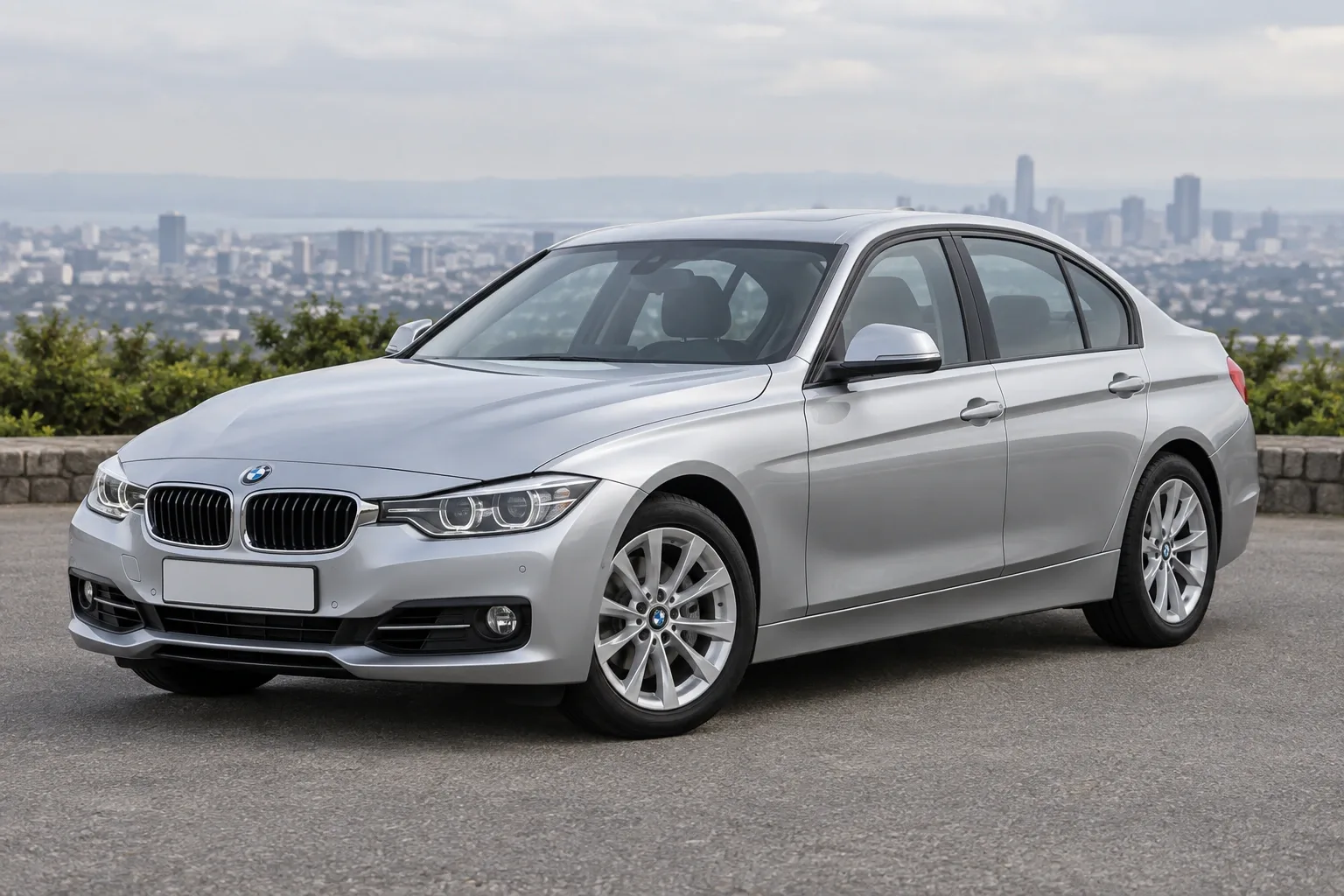
BMW 3 F30
Rating of the BMW 3 F30 (2011–2020): condition, documents, inspection and conditions of sale of the car.
Indicative purchase price
Below market value
Final price agreed after inspection.
Value my car1Why buyers choose this model
The BMW 3 F30 is of great interest. One of the great advantages is certainly rich equipment.
2What buyers check
Review
The BMW 3 F30 is of great interest. One of the great advantages is certainly rich equipment. The F30 received three equipment lines: Sport, Modern and Luxury. In combination with numerous options, you can find a huge number of combinations of colors and equipment.
The important feature of the “three” is good ergonomics. The center console is turned back to the driver. The predecessor was criticized for ignoring the decision.
Unfortunately, the limited space on the back sofa is a typical feature of all BMW 3 Series. However, this generation of space is clearly more than in the BMW E90.
The GT version has an increased distance between the axles, compared to the sedan and wagon. And this is really noticeable to the passengers of the second row. In addition, GT tempts with stylish solutions such as windows without frames.
Conventionally, the BMW F30 can be classified as follows: the sedan is prepared for the most conservative fans of the brand, the wagon (F31) for families with children, and the GT (F34) for those who need a more capacious and practical body.
In 2015, BMW 3 was updated, in particular bumpers and a number of engines. The rear lights have become fully LED. LED technology received and headlights of individual modifications.
Engines
Most engine versions can be described to an excellent degree if we are talking about dynamics. All gasoline units without exception have turbocharging and direct fuel injection.
The 3-cylinder turbo engine with a volume of 1.5 liters does not correspond to the nature of the model. The same applies to the 1.6-liter engine, developing 136 hp. Much less objections is a 2-liter engine, and even more so a 3-liter. Interestingly, even a 306-horsepower unit can be content with less than 10 liters per 100 kilometers. And the three he torpedoes up to 100 km / h in 5.6 seconds (test measurements).
Among diesel engines, it is better to choose between the 2.0 R4 and 3.0 R6. If you do not take into account the 116-strong version, then you can count on a really pleasant dynamics. The average real fuel consumption will be about 6 liters.
For more economical, there is a version of EfficientDynamics (including with gasoline engines). It received improved aerodynamics and tires with reduced rolling resistance.
Three-liter diesel engines demonstrate near sporty dynamics.
In terms of content and service, the situation with engines is somewhat worse. First of all, they should be divided into two groups: before the modernization in 2015 and after.
Petrol engines
The old petrol engines belong to the N series. They tend to accumulate swelling on the intake valves. The base 1.6 series N13 is nothing more than 1.6 THP, created in collaboration with PSA. He became famous for problems with the timing system chain (can jump and destroy the engine). To update the chain will have to prepare more than 40 000 rubles. Another drawback 1. 6 - increased oil consumption due to early aging of oil caps or faulty valve ventilation crankcase gases (blubbers membrane). The valve is built into the valve cover (from 9000 rubles for an analog or 24 0000 rubles for the original). After 80-120 thousand km often loses the tightness of the pipes of the turbocharger and crankcase gases (2-6 thousand rubles). Do not differ in durability and ignition coils (2-3 thousand rubles). Not only that, a faulty coil can even finish off the DME engine control unit. The problem of short-lived drive of the timing system affected and 2.0 series N20. Usually begins to make noise stretched chain drive oil pump, or crumble plastic guide chains. The defect manifests itself on a fairly wide stretch - 100-200 thousand km of run. Many owners prefer a preventive replacement of the drive after 100-120 thousand km (over 50 000 rubles). Increased oil consumption can be caused by faulty CHACG (built into the valve cover). At the same time, it is often necessary to eliminate fogging in the area of the heat exchanger and the oil filter housing (7000 rubles). After restyling, gasoline units of the B series appeared. Theoretically, they were refined, but as practice has shown, they are still not perfect.
2.0 d
Until 2015, the list of diesel units was present 2. 0d series N47. He had several versions. In 316d there were no vortex flaps, and in 318d there were no vortex flaps. They share a turbocharger. In 320d, the turbine is different, and in 325d - two turbochargers. The nozzles were used piezoelectric. The most famous problem with N47 is the timing system chain. Usually the drive of the timing system has to be changed after 130-180 thousand km. However, there are instances that have passed on the factory chain of 300,000 km. Much depends on the operating conditions, the quality of the oil and the frequency of its replacement. The first sign of a malfunction is the noise that appears after starting the cold engine. The kit itself is inexpensive, but the replacement... In total, about 60,000 rubles. All because the circuit is installed on the side of the gearbox - the engine has to be dismantled. Some mechanics offer replacement without removing the engine. Another problem is the crankshaft damper pulley, which is given after 100,000 km. And to 150-200 thousand km in the intake manifold accumulates a large amount of soot (5000 rubles for cleaning). In 2015, the N47 was replaced by a 2-liter B47 (318d/150 hp and 320d/190 hp). It is less prone to stretching the timing system chain, although sometimes it does. All versions of the B47 received electromagnetic fuel injectors, except for the 325d, which was left with piezoelectric nozzles. Note that both two-liter diesels (N47 and B47) were hit by service promotion due to the risk of fire as a result of leakage of antifreeze from the EGR cooler module.
Transmission
In pair with the engines, an 8-speed ZF 8HP automatic machine works. It is quite reliable and durable, but subject to oil renewal every 60,000 km. This will require about 20,000 rubles.
Sometimes the box pulls "cold", but it is usually not possible to fix this.
Before repairing the automatic transmission, it is extremely rare, Those who were lucky enough to go through the box had to pay about 140-160 thousand rubles.
Regular oil updates require and transfer box xDrive optional all-wheel drive.
After 100-150 thousand km can fill the rear gearbox (from 14 to 47 thousand rubles for replacement). And for fans of sports driving (annealing and drifting), the gearbox can soon make noise (30-50 thousand rubles per used knot).
Silent blocks of the rear gearbox wear out after 100-150 thousand km. For the replacement of 3 Silentblocks (for 2-3 thousand rubles per piece), you will have to pay about 15 000 rubles.
Elastic couplings of the driveshaft (3-9 thousand rubles) are updated after 150-200 thousand km.
Walking
The suspension demonstrates good wear resistance, but the cost of updating aluminum levers will not be low.
After 60-100 thousand km, floating solar blocks can creak from behind (1-3 thousand rubles plus 1000 rubles for work). Silent blocks of the front levers (2-3 thousand rubles) become unusable after 80-120 thousand km. The ball supports will last no less. They are assembled with a lever (5-9 thousand rubles per lever).
Front and rear shock absorbers (5-8 thousand rubles) usually go over 100,000 km. A little later, the supports of the rear shock absorbers can be knocked (2-4 thousand rubles).
The steering rack may require intervention after 100-150 thousand km (knocking appears). The cost of repair will be 20-25 thousand rubles.
Stage bearings are assembled with a hub (about 4000 rubles plus 2000 rubles for work) and usually go over 200,000 km.
Other problems and malfunctions
It’s not just the engines that are causing concern. Sometimes there are problems with electricity. For example, the light can begin to live its life. There is a short circuit in the LCM block. Or it may require reprogramming of the multimedia management module.
You should pay attention to the taillights (the contacts are oxidized or melted).
There are problems with door locks - the cable is torn (1600 rubles), or the lock itself is surrendered.
In the GT version, the rear spoiler is controlled (this is the first time BMW has applied this solution).
Some owners complain about the quality of performance (squeaking and knocking in the cabin) and mediocre noise insulation.
The batch of cars of the initial period of production received seats that creak in the corners.
Dakota’s light skin is very tender, and if you don’t take care of it, it wears out quickly.
Leather upholstery of the driver's seat, central armrest and steering wheel often decays after 100-150 thousand km. By this time, the coating of door handles begins to peel off (2000 rubles for an analog).
BMW M3 since 2013
Under the hood you will find a 3.0 R6 with two turbines. In the basic version, the engine offered 431 hp. There are also two special variants: 450 hp with the Competition package (includes 20-inch forged wheels and an active differential on the rear axle) and 460 hp in the CS.
The engine has a so-called dry magnesium crankcase. The most powerful variant was combined with an automated dual-clutch transmission (an option for weaker versions). The roof is made of carbon fiber, which reduced weight and reduced the center of gravity.
The M3, built on the F30 base, was designated F80 and is manufactured at the Regensburg plant.
BMW ActiveHybrid 3
This is a classic hybrid car with a gasoline engine 3.0 R6 (turbo, direct injection) and a 54-horsepower electric motor. The electric drive allows you to reach speeds up to 75 km / h with a power reserve of up to 4 km. The hybrid has rear-wheel drive and an 8-speed automatic transmission.
BMW 330e
Version 330e iPerformance is a revolutionary plug-ins hybrid. The theoretical fuel consumption (reduced from 5.9 liters to 1.9 liters per 100 km) is greatly underestimated and is not achievable in practice. This is due to large batteries and a powerful electric motor. Under the hood works 2.0T/184 hp The hybrid uses rear-wheel drive and an 8-speed automatic.
3Pre-purchase checklist
Engines
- And the three he torpedoes up to 100 km / h in 5.6 seconds (test measurements).
Petrol engines
- He became famous for problems with the timing system chain (can jump and destroy the engine).
- The problem of short-lived drive of the timing system affected and 2.0 series N20.
- At the same time, it is often necessary to eliminate fogging in the area of the heat exchanger and the oil filter housing (7000 rubles).
2.0 d
- The most famous problem with N47 is the timing system chain.
- The first sign of a malfunction is the noise that appears after starting the cold engine.
- The kit itself is inexpensive, but the replacement... In total, about 60,000 rubles.
- Another problem is the crankshaft damper pulley, which is given after 100,000 km. And 150,000 to 200,000.
- All versions of the B47 received electromagnetic fuel injectors, except for the 325d, which was left with piezoelectric nozzles.
- Note that both two-liter diesels (N47 and B47) were hit by service promotion due to the risk of fire as a result of leakage of antifreeze from the EGR cooler module.
Transmission
- Before repairing the automatic transmission, it is extremely rare, Those who were lucky enough to go through the box had to pay about 140-160 thousand rubles.
Walking
- The suspension demonstrates good wear resistance, but the cost of updating aluminum levers will not be low.
- The steering rack may require intervention after 100-150 thousand km (knocking appears). The cost of repair will be 20-25 thousand rubles.
Other problems and malfunctions
- Sometimes there are problems with electricity.
- You should pay attention to the taillights (the contacts are oxidized or melted).
- There are problems with door locks - the cable is torn (1600 rubles), or the lock itself is surrendered.
- Some owners complain about the quality of performance (squeaking and knocking in the cabin) and mediocre noise insulation.
BMW M3 since 2013
- The engine has a so-called dry magnesium crankcase.
4Challenges of selling privately
In terms of functionality, the BMW 3 F30 is a good car. However, maintenance and repairs will require a lot of money, especially if you are buying a risky engine, such as a 2-liter or even smaller. The restyled versions are better, but more expensive. With age, the cost of ownership will only increase.
- The BMW 3 F30 is a big deal.
- Engines: Most engine versions can be described to an excellent degree if we are talking about dynamics.
- Gasoline engines: He is notorious for problems with the timing chain (can jump and destroy the engine).
- Transmission: Before repairing the automatic transmission, it is still extremely rare, Those who were lucky enough to go through the box had to pay about 140-160 thousand rubles.
- Driving: The suspension demonstrates good wear resistance, but the cost of updating aluminum levers will not be low. After 60,000 to 100,000.
- Other problems and malfunctions: Sometimes there are problems with electricity.
Shows, bargaining and re-registration take time: buyers look, promise to think and disappear. Fair price after inspection closes the auction on the spot. If money is needed urgently, the purchase takes away waiting and repeat displays.
5How selling to us works
Leave a request with the car data. We will discuss the preliminary assessment and inspection. After checking the status and documents, we agree on the final price and terms of the transaction.