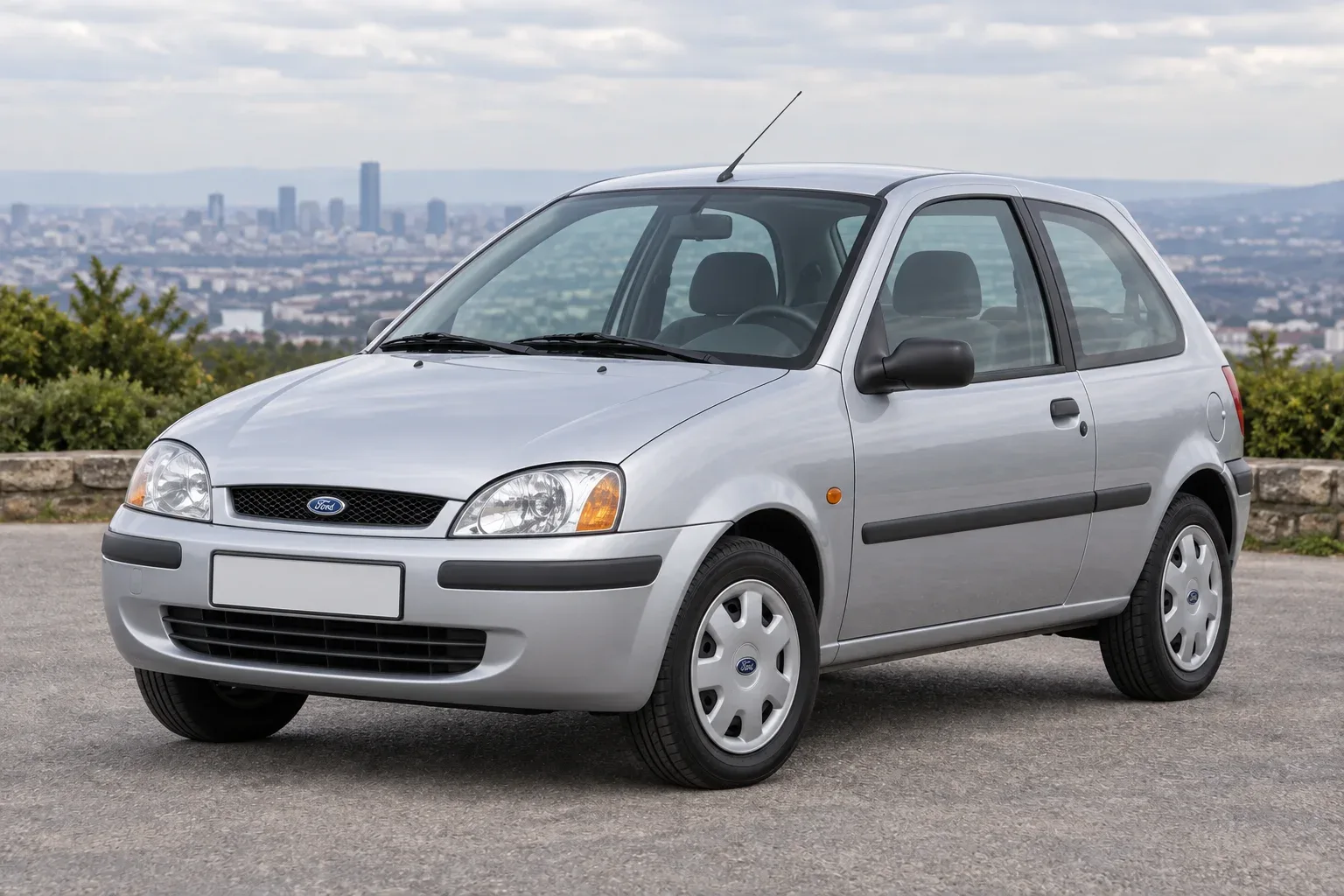
Ford Fiesta 4
Valuation of the Ford Fiesta 4 (1995–2002): condition, paperwork, inspection and terms of sale.
Indicative purchase price
Below market value
Final price agreed after inspection.
Value my car1Why buyers choose this model
A special contribution to the development of Ford's popularity was made by the third generation Fiesta, produced between 1989 and 1995. It was impressive for its functionality and range of engines, as well as rich equipment (by the standards of the time).
2What buyers check
Review
A special contribution to the development of Ford's popularity was made by the third generation Fiesta, produced between 1989 and 1995. It was impressive for its functionality and range of engines, as well as rich equipment (by the standards of the time). It was the first car in the class to use the ABS system. But her time is long gone.
The cheapest used Fiesta to contact, debuted in 1995. This is a fourth-generation model worth from 35,000 rubles. In 1999, the Fiesta was updated (Mk5), and three years later gave way to a completely new model. The Mk4/Mk5 shares a technical base with the Japanese Mazda 121.
Body and salon
Thanks to the impressive silhouette, the Ford Fiesta Mk5 looks good. What can not be said about the pre-restyling copies of the Mk4. Attention deserve richer versions equipped with a hatch and alloy wheels. Especially interesting are the Ghia trim levels, which have leather trim of the steering wheel and gear lever, upholstery of quite high quality, plastic linings that simulate wood, power steering, electric windows and air conditioning.
The fiesta will appeal to those who appreciate the sporty driving style for not too large and thick steering wheel, a well-tuned suspension and a pleasant in the work mechanism for selecting gears. Unfortunately, adults on the back of the sofa will be cramped. There is no room in the knee area.
Positive emotions from the car spoils only mediocre protection against corrosion. Even accident-free specimens have rust on the rear wings and rapids. Plus, through the Internet you can still order parts for body repair.
Ford's keys had an unusual tip of tongue.
Engines
The best choice in the engine range is a 1.25-liter gasoline atmospheric. The unit is poured from light alloys, and the design of the unit was developed in conjunction with Yamaha. The engine works quite gently, rotates well and at the same time is relatively economical. The motor has two camshafts driven by a geared belt. The instruction for operation provides for the first replacement of the belt with rollers through 120,000, and the subsequent - every 90,000 km. But provided that the area of the drive valve timing is perfectly clean (no dirt and stains). In fact, the replacement interval is better to reduce to 60,000 km. Here we are dealing with mechanical adjustment of the gap of valves with the help of washers. Practice shows that this system works best on high-speed engines. If no gas cylinder equipment is used, adjustment is not required even after 120,000 km. Not every mechanic will have adjusting washers of the required size. The cost of one washer is in the region of 400 rubles. A typical ailment of most specimens is a high oil consumption after 120-150 thousand km. An effective solution is to switch to another oil – more viscosity. However, it should be remembered that Ford sets a strict framework for lubricants. 16-valve gasoline engines with a capacity of 1.4 and 1.6 liters have a similar design and offer more driving pleasure, at a reasonable fuel consumption. Depending on the operating conditions, the fuel appetite is in the range of 5-10 liters per 100 km. Cars with a 1.3-liter petrol and 1.8-liter diesel engine should be avoided.
Walking
The Ford Fiesta suspension is simple and cheap to maintain. On the front axle are classic Macpherson struts with triangular levers. Ball supports and Silentblocks can be replaced separately, but this is not always easy to do.
The rear suspension is built on the basis of a torsion beam, which simultaneously plays the role of a stabilizer of transverse stability. Only three elements need periodic replacement: Silent blocks at the points of attachment of the beams to the body, shock absorbers and springs.
Interesting fact. The Fiesta 1.6 S (1999-2002) has the same suspension settings as the sports Ford Puma.
Other bodywork options
Ford Fiesta was produced in five body variants. The most common 3- and 5-door hatchback, as well as commercial versions for the delivery of small cargoes "Courier" and VAN.
The sedan was available in the Chinese and Indian markets until 2007. For India, the car was called the Ford Ikon and air conditioning as a mandatory equipment. Such cars in the local market were considered a real luxury. In China, the sedan was offered under the name Ford Fiesta S Sedan.
In the South African market, the Ford Bantam truck lasted until 2014.
The history of Ford Fiesta 4
1996 - debut of the 3- and 5-door versions of the model.
1997 – Expansion of the list of standard and additional equipment.
1999 – Facelift (Fiesta MK5) The front bumper slightly changed, and new details appeared in the interior.
2000 – 1.8 Endura DE DI diesel engine with modified gas distribution system and direct fuel injection is presented.
2001 – presentation of the new generation model – Fiesta Mk6.
Typical malfunctions:
Increased engine oil consumption after 150,000 km.
Disadvantages:
Many of the specimens have poor equipment.
Specifications of the Ford Fiesta IV (1995-2002)
Dynamic characteristics (producer)
3Pre-purchase checklist
Body and salon
- Positive emotions from the car spoils only mediocre protection against corrosion.
- Even accident-free specimens have rust on the rear wings and rapids.
- Plus, through the Internet you can still order parts for body repair.
Engines
- Not every mechanic will have adjusting washers of the required size.
- However, it should be remembered that Ford sets a strict framework for lubricants.
- Cars with a 1.3-liter petrol and 1.8-liter diesel engine should be avoided.
- Due to the specific design of the intake manifold, it is not recommended to use gas cylinder equipment.
4Challenges of selling privately
Against the backdrop of the sixth-generation Fiesta, the Mk4/5 is not impressive. It is noticeably more compact inside and much worse protects against the consequences of a collision. On the other hand, the Fiesta IV is significantly cheaper, and the 1.25-liter engine is sleek, quiet and economical. The well-groomed specimen will fully satisfy the needs of unassuming drivers and will be well suited for the role of the first car.
- A special contribution to the development of Ford's popularity was made by the third generation Fiesta, produced between 1989 and 1995.
- Body and interior: Positive emotions from the car spoils only mediocre protection from corrosion.
- Engines: The best choice in the engine range is a 1.25-liter gasoline atmospheric.
- Driving: The Ford Fiesta suspension is simple and cheap to maintain.
- Other body options: Ford Fiesta was produced in five body variants.
- The history of the Ford Fiesta 4: 1996 - the debut of the 3- and 5-door versions of the model.
- Typical faults: Increased engine oil consumption after 150,000 km.
- Disadvantages: Many of the items are poor.
Shows, bargaining and re-registration take time: buyers look, promise to think and disappear. Fair price after inspection closes the auction on the spot. If money is needed urgently, the purchase takes away waiting and repeat displays.
5How selling to us works
Leave a request with the car data. We will discuss the preliminary assessment and inspection. After checking the status and documents, we agree on the final price and terms of the transaction.