
Ford Puma 1
Valuation of the Ford Puma 1 (1997–2001): condition, paperwork, inspection and terms of sale.
Indicative purchase price
Below market value
Final price agreed after inspection.
Value my car1Why buyers choose this model
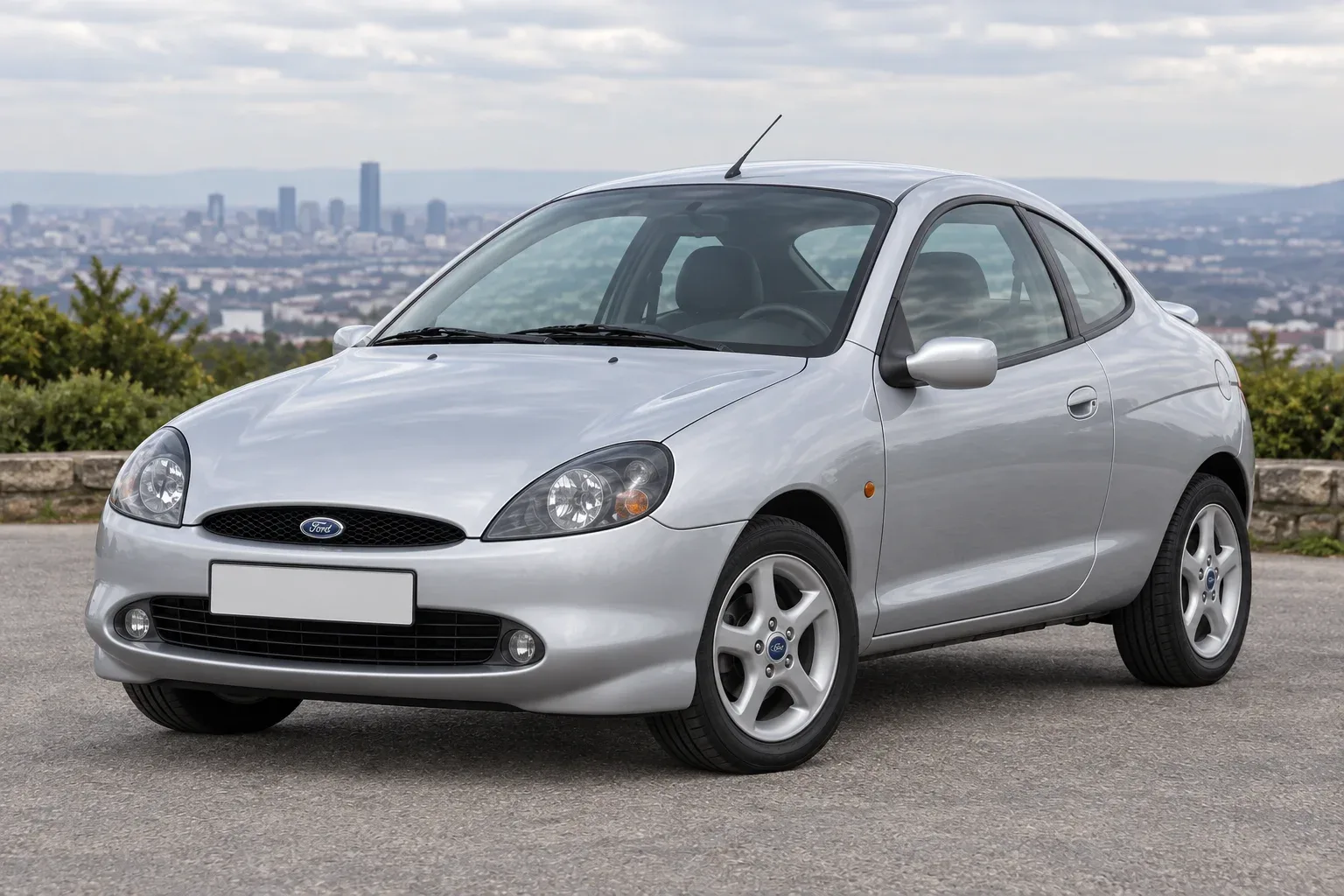
Although Ford Puma was completed in 2001, it still looks good and rides well. Thanks to the simple design, ease of maintenance, light body and excellent suspension, a small coupe can give a sea of driving pleasure.
2What buyers check
Review
Although Ford Puma was completed in 2001, it still looks good and rides well. Thanks to the simple design, ease of maintenance, light body and excellent suspension, a small coupe can give a sea of driving pleasure.
This project was released in 1997, shortly after the premiere of the Ford Fiesta IV. Its slightly upgraded platform formed the basis of the Puma along with the running and most powerful engines. In 1999, the model was slightly updated.
The front-wheel drive coupe has a simple suspension. The front uses Macpherson racks, and the rear - almost no maintenance torsion beam.
It should be noted that Puma is very obedient. During dynamic driving, it resembles a map a bit – small, nimble and holds the road well. Ford designers managed to choose the optimal settings - the level of comfort does not cause much objection. And thanks to the small weight (about 1040 kg), the brake system with the drums at the back is quite effective - 39 m to a full stop from 100 km / h.
The interior almost completely migrated from Fiesta and perfectly combines with the appearance. Round shapes in the late 90s were in fashion. A nice addition is a round, metal gear pick handle. Switching is fun thanks to the short stroke of the lever and the clutch pedal.
This car is for two people - the seats are symbolic behind. There will be able to accommodate people no higher than 160 cm 240-liter trunk will allow you to carry small purchases or a sports bag. The rear window is integrated into the trunk lid.
Engines
The range of powertrains Ford Puma modest. The base volume of 1.4 liters and 90 hp does not reveal the sports nature of the car. But for everyday travel, its potential is sufficient. According to the manufacturer, acceleration to 100 km / h takes almost 12 seconds. That's not a bad result. But to increase the speed from 80 to 120 km / h will take more than 20 seconds. The motor is reliable and easy to operate. If you want to buy a Puma, it will be with a 1.6 DOHC from the Ford Focus I. The engine was designed by Yamaha engineers and shows no signs of wear even after 200,000 km. 103-horsepower unit provides a sprint of up to a hundred in 10.1 seconds. Even more interesting is the version with the engine 1. 7 VCT / 125 hp. It was designed specifically for the coupe and was never used anywhere else. The motor is equipped with a system of changing the phases of gas distribution and is willingly unwinded to high speeds. They allow you to reach the first hundred in 9.2 seconds and reach a top speed of 203 km / h. The camshafts are controlled by the so-called variator, which is the only vulnerable element. Its durability and functioning depend on the quality, level and viscosity of the oil. The manufacturer recommends using 5W30 viscosity oils. With problems with the variator at idle, rattles or tsokot appear, and in motion, despite the growth of revolutions, the speed increases slowly. A new variator of roads and it is difficult to find it. "Beu" spare part can be purchased for 5,000 rubles. For more demanding customers, the 1.7-liter unit was forced to 155 hp.
Typical problems and malfunctions
Owners sometimes notice faults in the heating and ventilation system. This is usually to blame for the control module, the electric control valve heater or corrosion of electrical contacts. A faulty resistor of the fan cooling system can bring the engine to overheating. In general, minor electrical failures are the agenda for this car. For example, the light switch on the steering wheel fails, or the central lock fails. The headlights have a very weak passing light and often sweat. They also have HB3 lights that you can’t buy in every store. You should always have one in reserve. The replacement on the left headlight will be an unpleasant surprise. This will require removing part of the intake system. Corrosion is another disadvantage of Ford Puma. Fortunately, it doesn't rust at an alarming rate. Red spots can be found on wheel arches, rapids, back door and even on the bottom. Body repairs make it difficult to find spare parts, which are becoming less and less on the secondary market every year. The racks and bushings of the transverse stability stabilizer serve several tens of thousands of kilometers. Stage bearings run more than 70-100 thousand km. Approximately the same will serve and sleeves of the front levers. The suspension and brakes can be restored inexpensively, as they are completely interchangeable with the Ford Fiesta. The transmission is simple and quite strong. With large runs, oil leaks appear. Contrary to popular belief, Puma is considered reliable. It rarely breaks down so that it loses its ability to move.
3Pre-purchase checklist
Review
- It should be noted that Puma is very obedient.
Engines
- But for everyday travel, its potential is sufficient.
- The engine was designed by Yamaha engineers and shows no signs of wear and tear even after 200,000 km.
- The manufacturer recommends using 5W30 viscosity oils.
- With problems with the variator at idle, rattles or tsokot appear, and in motion, despite the growth of revolutions, the speed increases slowly.
- Among the common problems are failures in the operation of the ignition system (due to the failure of the coils), failure of the stepping engine (responsible for idling) and the thermostat.
Typical problems and malfunctions
- Owners sometimes notice faults in the heating and ventilation system.
- This is usually to blame for the control module, the electric control valve heater or corrosion of electrical contacts.
- For example, the light switch on the steering wheel fails, or the central lock fails.
- The headlights have a very weak passing light and often sweat.
- The replacement on the left headlight will be an unpleasant surprise.
- Corrosion is another disadvantage of Ford Puma.
- Body repairs make it difficult to find spare parts, which are becoming less and less on the secondary market every year.
- It rarely breaks down so that it loses its ability to move.
4Challenges of selling privately
The Ford Puma has never been popular, and the heyday is long past. All cars in the base are equipped with air conditioning, two airbags and ABS. The main thing is that the car does not participate in serious accidents. Poorly fitted body elements, traces of careless painting or glued bumpers are a common picture. Finding a really good copy is very difficult, and there are only a little more than a dozen ads. The owners ask for a coupe from 100 to 230 thousand rubles.
Ford Puma is a good choice, provided that there is a moderately well-groomed specimen of the last years of production. Buying a version with a 1.7-liter engine, you should be ready to invest about 30-50 thousand rubles. If there is a smaller engine, the starting costs will be lower.
- Despite the fact that production of the Ford Puma was completed in 2001, it still looks good and rides great.
- Engines: But for everyday commutes, its potential is quite sufficient.
- Typical problems and malfunctions: Owners occasionally report faults in the heating and ventilation system.
Shows, bargaining and re-registration take time: buyers look, promise to think and disappear. Fair price after inspection closes the auction on the spot. If money is needed urgently, the purchase takes away waiting and repeat displays.
5How selling to us works
Leave a request with the car data. We will discuss the preliminary assessment and inspection. After checking the status and documents, we agree on the final price and terms of the transaction.