
Mercedes-Benz W140
Mercedes-Benz W140 (1991–1998): condition, documents, inspection and conditions of sale of the car.
Indicative purchase price
Below market value
Final price agreed after inspection.
Value my car1Why buyers choose this model
Majestic, powerful and reliable – these words perfectly reveal the features of the Mercedes S-Class W140 series. Once popular among the “new Russians” car today can be purchased for very funny money. This is very exciting, especially for young people.
2What buyers check
Model history
1994 – stylistic and technical restyling.
Design features
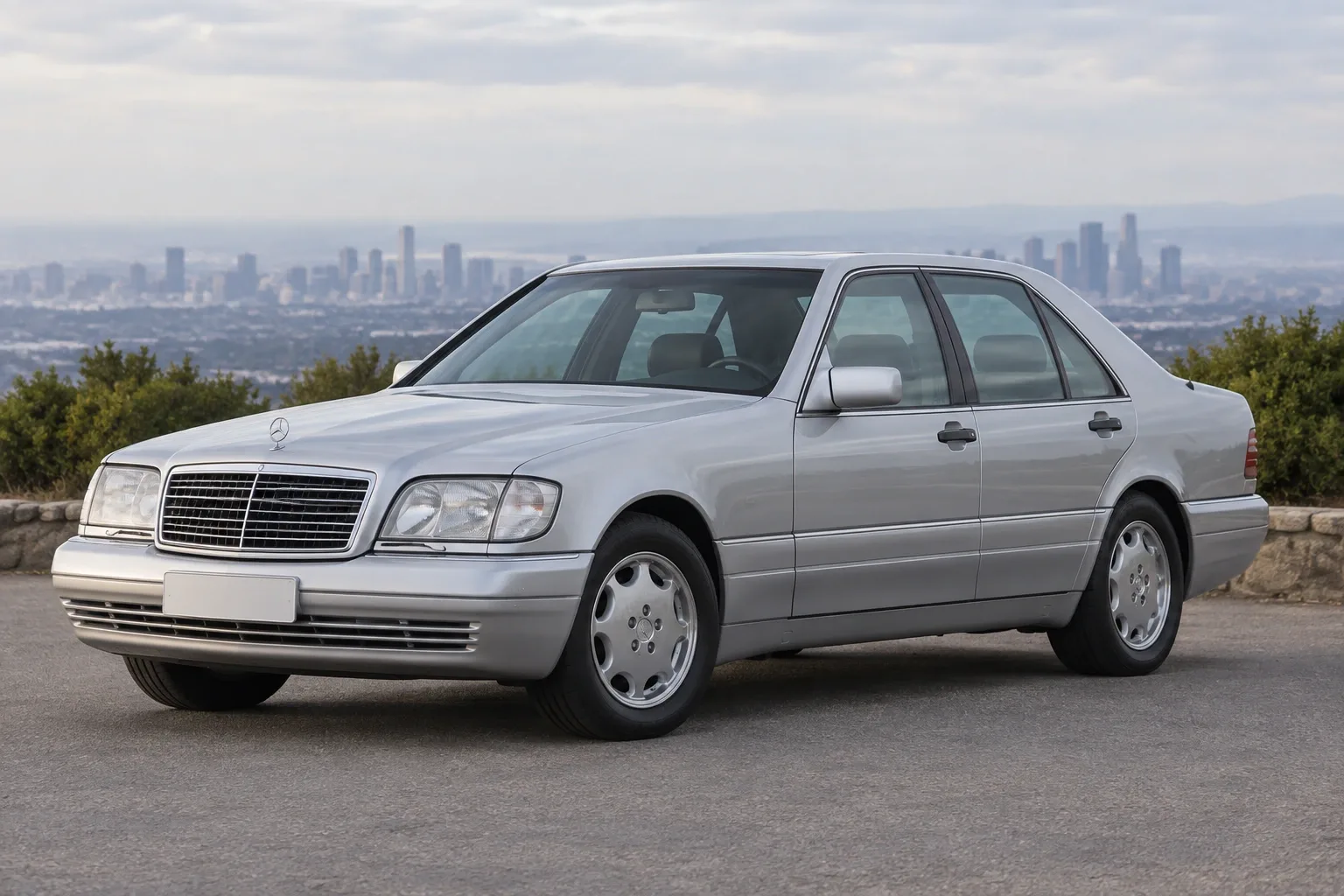
The Mercedes W140 was introduced in 1991. The sedan’s styling is almost identical to the C-Class and E-Class of the time. But to confuse the iconic Mercedes with the younger models is impossible. A whopping 5.1 meters is the main difference between the flagship from the 90s. The car was designed with one goal in mind – to give the customer the maximum of luxury and equipment available at the time. Technically, the huge Mercedes was without a doubt the best in the world. Shortly after, the W140 became the favorite car of crowned heads, Arab sheikhs, stars and “new Russians”. It had the best and most modern equipment. The list of equipment would take a dozen pages, so we will limit ourselves to the most impressive. So, everything that could move, fold or unfold got a servo drive. For example, when the gear of the reversing, the head restraints of the second row of seats were folded, and the edges of the rear wings were extended by "antenki", prompting the dimensions. Many people found this detail amusing. After restyling, the “mustache” disappeared, but for a surcharge it was possible to install parking sensors. The doors and trunk lid received pneumatic closers. These elements were very heavy, as was the W140 itself, which weighed more than 2 tons. Today, such a weight is not impressive, but in those days the idea of light and heavy cars were completely different. The steering column was equipped with an electric drive, and for an additional fee, each of the four passengers could get their own controlled climate zone. The level of comfort on board can only be described to an excellent degree.
Engines
The 90s are the times when the index on the trunk lid really corresponded to the working volume of the engine under the hood. So, the sign S 280 implied a 6-cylinder block with a capacity of 2.8 liters and a capacity of 193 hp. There is no doubt that this engine has no place in such a large ship. The same can be said for the S 320 or S 320 SE version – with the same engine, but extended to 3.2 liters (231 hp). It is worth noting that the block of all these units had 6 cylinders arranged in a row. Both versions were available with a manual transmission. Turbodiesels were not distinguished by their good valor. Here used 6-cylinder units OM600 volume of 3.0 and 3.5 liters, developing 177 and 150 hp, respectively. The torque (310-330 Nm) was not impressive and slightly higher than the most modest atmospheric engine (270 Nm). TD only allowed for lower operating costs, because diesel fuel was cheaper than gasoline at the time. But the diesel’s tough work did not match the exclusive character of the Mercedes S-Class. Only petrol V8 (400, 420 and 500) and V12 (600) were really fun. The weaker 4.2-liter V8 developed power of 279 and 286 hp (S 400 and 420), while the 5-liter 320-326 hp. However, an even more important parameter is the torque reaching a value of 480 Nm. The base V8 generates 400 Nm, which is also quite a lot. Phenomenal performance has a 6-liter V12, developing 394 or 408 hp.
Which engine should you choose?
First of all, you need to think about why you need such a car. The huge sedan is not suitable for everyday trips every day, especially around the city. But if you don’t have to, the best choice is the S 320 or S 300 SE. It is worth noting that under the last designation hides a 2.8-liter engine. In any case, it is not worth waiting for good dynamic performance from 6-cylinder engines. You should not expect an average fuel consumption below 15 liters. The mechanical-box versions are a little more economical, but not as comfortable. Not worthy of recommendations and turbodiesels. Low fuel consumption is more than offset by maintenance costs. Diesel engines are weak and vulnerable. Contrary to popular belief, electric powertrains are not complex and do not require constant intervention. All engines have a chain-type timing system drive, which is durable. However, with impressive runs, the chain and gears of the S600 12-cylinder engine wear out most quickly. The costs in the operation process are directly proportional to the engine volume and the number of cylinders. For example, for 12 candles in the block S 600 will have to pay at least 2 000 rubles. Well, if the gaskets under the heads burn out, then the remake will cost at least 10,000 rubles. But you also need to dismantle two 6-chamber heads, which is quite expensive. You should be ready for the insatiable thirst for the “six hundredth” – about 20 liters per 100 km. However, the reliability and durability of motors depends on the care of the past. More susceptible to diesel malfunctions. Especially the 3.5-liter one, which is afraid of overheating.
Typical problems and malfunctions
The S-Class of the 90s is one of the most reliable executive cars of the time. 10 years of development were not in vain. Although the owners of the C-Class and E-Class face corrosion, the W140 body lasts much longer. The first two years of production (1991 and 1992) are less susceptible to corrosion. In 1993, Mercedes began to use water-based paints in accordance with stricter environmental requirements. They resist rust worse and begin to peel off faster than previous solvent-based varnishes. But even if rust appears, the metal for a very long time resists through corrosion. One of the favorite places of corrosion is holes under the jack. With age, surface corrosion of wheel arches is inevitable. Another weak point is the metal above the cylinder of the trunk lid lock. The electric part is practically not let down, even despite such a rich equipment. Problems with electrical equipment can occur only after serious accidents and flooding. However, all systems should be checked, especially windows and climate control. Buying a relatively cheap copy, you need to focus on examining the engine and automatic transmission. Repairing these units will not be cheap. For leaks, it is worth inspecting the box and the rear bridge. During the inspection, you should look under the lid of the oil filler neck. The presence of soda will tell about irregular oil replacement or poor quality, and milky-foam deposits - about problems with the head of the block or gaskets.
Operating costs
Intensive operation quickly kills brake pads and discs of medium quality. The more powerful the engine, the larger the discs. If you are going to travel for a long time, then you should change worn components for high-strength products.
Many spare parts and consumables have substitutes, however, the cost of some of them is 1.5-2 times higher, in comparison with popular middle-class cars. For example, the price tag for the clutch kit begins with the mark of 13,000 rubles.
At the same time, thanks to the simple design of many components, some types of repairs may be cheaper than for some modern cars. For example, a hub bearing will cost only 1.5-2 thousand rubles, which is almost 2 times cheaper than a non-shattered hub, with integrated bearings (a common solution today).
Multi-link suspension requires frequent service, but, fortunately, not too expensive. The cost of the upper aluminum lever is from 4 000 rubles, and the rear (most susceptible to wear) from 3 000 rubles. Unfortunately, the lower ones will cost more - from 11 000 rubles.
The servo door drive with age begins to work worse.
The problem is when you need to buy something unusual. For example, the hydropore of the engine (from 9000 rubles) or any of the pumps (from 55 000 rubles for pneumolocks). If something cannot be replaced by the W124, then the costs are high.
3Pre-purchase checklist
Design features
- For example, versions with a carbon cabin filter have additional air intakes on the hood.
Which engine should you choose?
- First of all, you need to think about why you need such a car.
- It is worth noting that under the last designation hides a 2.8-liter engine.
- You should not expect an average fuel consumption below 15 liters.
- You should be ready for the insatiable thirst for the “six hundredth” – about 20 liters per 100 km.
- More susceptible to diesel malfunctions.
- The cheapest to repair gasoline R6, besides it is familiar to many mechanics.
- A little more expensive in V8 content, and if something serious happens with the V12, then you can hardly afford to repair it.
- When searching for a suitable instance, you should bypass cars converted to work on gas.
Typical problems and malfunctions
- Although the owners of the C-Class and E-Class face corrosion, the W140 body lasts much longer.
- The first two years of production (1991 and 1992) are less susceptible to corrosion.
- They resist rust worse and begin to peel off faster than previous solvent-based varnishes.
- But even if rust appears, the metal for a very long time resists through corrosion.
- One of the favorite places of corrosion is holes under the jack.
- With age, surface corrosion of wheel arches is inevitable.
- Problems with electrical equipment can occur only after serious accidents and flooding.
- However, all systems should be checked, especially windows and climate control.
- Buying a relatively cheap copy, you need to focus on examining the engine and automatic transmission. Repairing these units will not be cheap.
- During the inspection, you should look under the lid of the oil filler neck.
- Then you should pay attention to the suspension.
Operating costs
- If you are going to travel for a long time, then you should change worn components for high-strength products.
- At the same time, thanks to the simple design of many components, some types of repairs may be cheaper than for some modern cars.
- The cost of the upper aluminum lever is from 4 000 rubles, and the rear (most susceptible to wear) from 3 000 rubles.
- The problem is when you need to buy something unusual.
4Challenges of selling privately
Although the luxury Mercedes 140 is already quite old, the market situation is not too intimidating. Prices, as a rule, have nothing to do with age, but depend on equipment and engine. For gasoline versions ask from 400 000 to 5 000 000 rubles. Diesel modifications are slightly more expensive - from 700 000 rubles.
On the market you can find everything: from surviving their term "old men", where no one did anything for ten years, and to the real unique rarities with one or two owners and a mileage of about 100,000 km. The AMG versions are the most valuable (more than 1 000 000 rubles). They were equipped with an engine of 7.1 liters and a capacity of 500 hp. The rarest modification of Brabus 2.0 Biturbo, prepared specifically for the Italian market, is also of interest.
Mercedes S-Class W140 – of course, is not suitable for the role of a family car, which is valued primarily for its economy and low operating costs. But the S-Class is a cult car in the history of Russia, which will always be in price. The main thing to remember is that the low cost of the cheapest copies will not be able to compensate for the huge costs of repairs.
- Model history: 1994 - stylistic and technical restyling.
- Design features: For example, the carbon cabin filter versions have additional air intakes on the hood. The suspension is a masterpiece.
- Engines: The 90s are the times when the index on the trunk lid really matched the engine’s working volume under the hood.
- Which engine to choose?: More susceptible to diesel malfunctions.
- Typical problems and malfunctions: Although C-Class and E-Class owners face corrosion, the W140 body lasts much longer.
- Operating costs: At the same time, due to the simple design of many components, some repairs may be cheaper than for some modern cars.
Shows, bargaining and re-registration take time: buyers look, promise to think and disappear. Fair price after inspection closes the auction on the spot. If money is needed urgently, the purchase takes away waiting and repeat displays.
5How selling to us works
Leave a request with the car data. We will discuss the preliminary assessment and inspection. After checking the status and documents, we agree on the final price and terms of the transaction.