
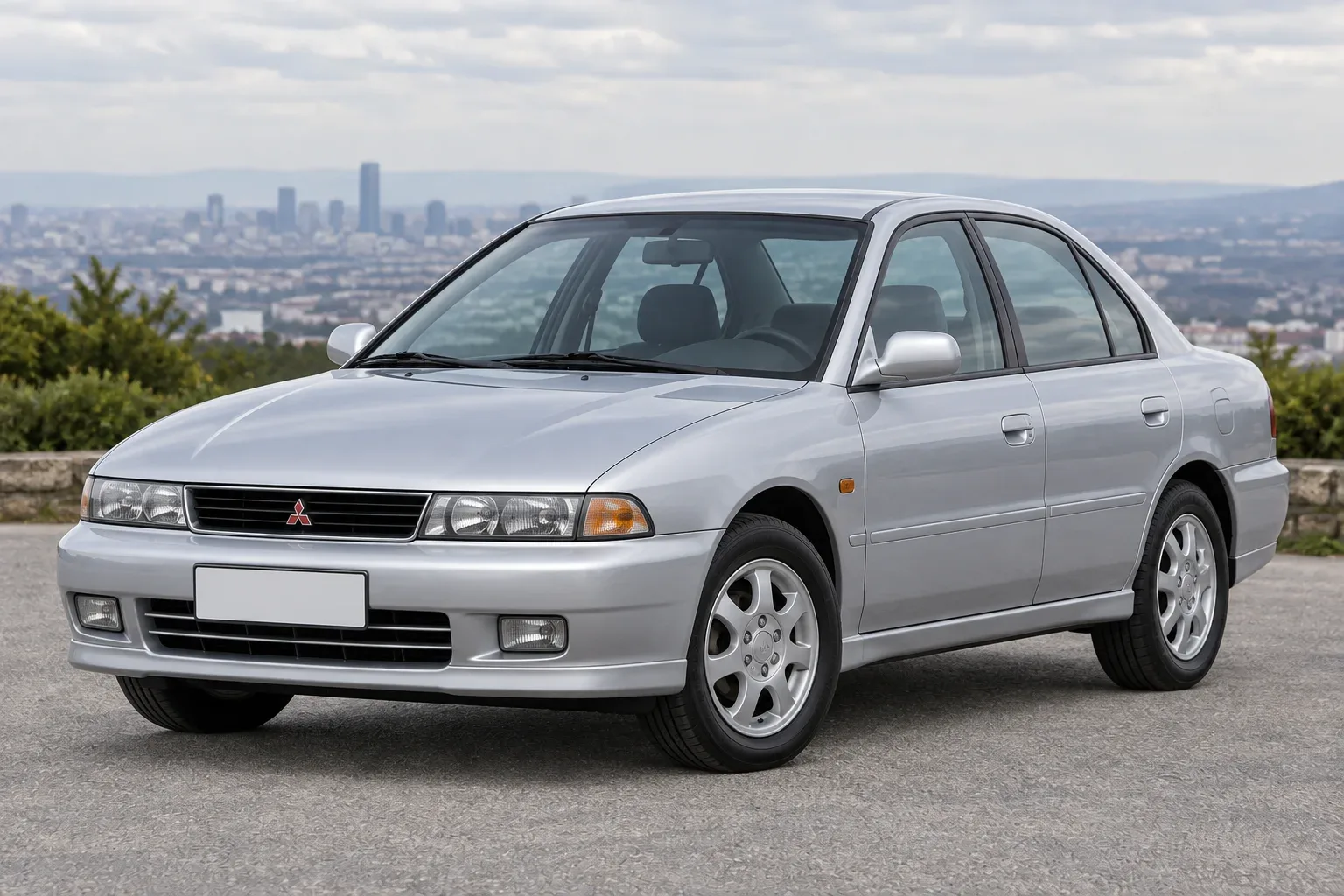
Mitsubishi Galant 7
Valuation of the Mitsubishi Galant 7 (1992–1997): condition, paperwork, inspection and terms of sale.
Indicative purchase price
Below market value
Final price agreed after inspection.
Value my car1Why buyers choose this model
Many motorists, when choosing the next purchase willy-nilly, think about cars older than 20 years. And, strangely enough, the demand for them still exists.
2What buyers check
Review
Many motorists, when choosing the next purchase willy-nilly, think about cars older than 20 years. And, strangely enough, the demand for them still exists. Mitsubishi Galant is a rather exotic offer, compared to German competitors of similar years. Galant is one of the most popular and age-old models of Mitsubishi. Its history began in 1969, and the 7th generation saw the light of day in 1993. The Japanese was offered in the body sedan and liftback. The next generation was replaced in 1997.
Today, everyone knows that the Mitsubishi Galant is a mid-range sedan. But it wasn't always that way. The Galant was originally a compact 4-door sedan. Mitsubishi later pulled off the same trick with Galant as Skoda recently with his Octavia. The model was increased in size, so we jumped to the next segment.
Exploitation
But what else can the old Mitsubishi Galant offer? You can expect anything from a car at a decent age. But despite its age, it shows surprisingly good durability. So what should you be afraid of during operation?
First of all, the suspension, which, given the age of the car, should not come as a surprise. Since, suspension multi-link type, it is very difficult to find a car in which nothing knocks and does not rattle. The suspension consists of 12 levers and several different bars. Most often, replacements require levers, shock absorbers, bushings and steering thrusts. Often, problems with hub bearings, which, unfortunately, change only in the collection with hubs and are not cheap.
There are also problems with the transmission. It simply cannot withstand long-term operation. Another problem is the delicate paintwork and corrosion, which often attacks the wheel arches and windscreen frame. Rust does not spare the exhaust system. The rest of the faults occur due to the considerable age of the car and large mileage. Among them - overheating, breakdown of the gasket gasket, failures in the operation of equipment and systems, wear of clutch and failure of the central lock. Despite this, the overall reliability deserves applause. Is the Japanese really better than their German competitors?
Interior
It’s no surprise that the interior of the Mitsubishi Galant seems undetectable. This is a vivid example of the helplessness of Japanese designers in front of German stylists. Inside, the car is trimmed with cheap, gloomy plastic, albeit soft to the touch. Despite the fact that the interior looks boring, the ergonomics did not pump up. Almost everything is in its place. Managing systems and equipment is very simple, especially against the backdrop of modern cars, with a manual on operation as thick as the Bible. But, despite the fact that Mitsubishi is from a past era, it still has a lot of interest.
Its main advantages are size and low cost. The car inside is quite spacious, at least by the standards of those years. This will make it a 4-seater family car. In addition, Mitsubishi Galant has a good equipment, which includes electrically controlled glass and mirrors, air conditioning. Two airbags have been installed since 1995.
Driving and transmission
The Japanese can not boast of sports obedience, but the multi-link suspension provides good handling. The Mitsubishi Galant is very predictable. In the chassis settings, emphasis is placed on comfort. And that’s very good, because it’s the comfort everyone expects from the sedan. The situation is worse with the effectiveness of ABS. The braking distance is 42.5 m. Even in the mid-90s, it was a bad result.
From the gearboxes it is better to prefer the mechanic. The machine is awful. There are even versions with all-wheel drive, but they are quite rare.
What about the engines?
All of them have a temporary type of HRM drive, requiring an update every 60,000 km. 1.8-liter engine with a capacity of 116 hp is amazing, but copes with the weight of Japanese cars. Overtaking lacks power, but if you unwind the engine, it seems that the car comes to life a little. There is also a 126-horsepower modification of the 1.8-liter engine, but it is better to find a version with a 2-liter engine. Power 137 hp gives more confidence, but here with dynamic maneuvers of high speeds can not be avoided.
Interestingly, there is also a V6 in the engine line. The flagship with a 2.5-liter unit with a capacity of 170 hp amazes with good traction, but makes you look at the gas station more often. It is worth paying attention to the 2-liter "six" returns of 150 hp. In exchange for slightly higher maintenance costs (compared to the 4-cylinder ones), the owner will get a lot of driving pleasure.
Rare for Russia diesel version with a working volume of 2.0 liters and a capacity of 90 hp is very slow. The only plus is low fuel consumption.
3Pre-purchase checklist
Review
- Mitsubishi later pulled off the same trick with Galant as Skoda recently with his Octavia.
Exploitation
- Often, problems with hub bearings, which, unfortunately, change only in the collection with hubs and are not cheap.
- Another problem is the delicate paintwork and corrosion, which often attacks the wheel arches and windscreen frame. Rust does not spare the exhaust system.
- The rest of the faults occur due to the considerable age of the car and large mileage.
- Among them - overheating, breakdown of the gasket gasket, failures in the operation of equipment and systems, wear of clutch and failure of the central lock.
What about the engines?
- It is worth paying attention to the 2-liter "six" return of 150 hp.
4Challenges of selling privately
The Mitsubishi Galant VII offers an excellent price/quality ratio. However, due to the respectable age, the Japanese does not guarantee uninterrupted operation. And yet, his endurance is admirable. Mitsubishi Galant is a good alternative to the legendary competitors from Germany.
- Many motorists, when choosing the next purchase willy-nilly, think about cars older than 20 years.
- Exploitation: There are also frequent problems with hub bearings, which, unfortunately, change only in the collection with hubs and are not cheap.
- Interior: It’s no surprise that the interior of the Mitsubishi Galant seems inconspicuous.
- Chassis and transmission: The Japanese can not boast of sports obedience, but the multi-link suspension provides good handling. The Mitsubishi Galant is very predictable.
- What about the engines?: All of them have a temporary type of valve timing drive, requiring an update every 60,000 km. 1.8-liter engine with a capacity of 116 hp.
Shows, bargaining and re-registration take time: buyers look, promise to think and disappear. Fair price after inspection closes the auction on the spot. If money is needed urgently, the purchase takes away waiting and repeat displays.
5How selling to us works
Leave a request with the car data. We will discuss the preliminary assessment and inspection. After checking the status and documents, we agree on the final price and terms of the transaction.