
Mitsubishi Galant 9
Valuation of the Mitsubishi Galant 9 (2003–2012): condition, paperwork, inspection and terms of sale.
Indicative purchase price
Below market value
Final price agreed after inspection.
Value my car1Why buyers choose this model
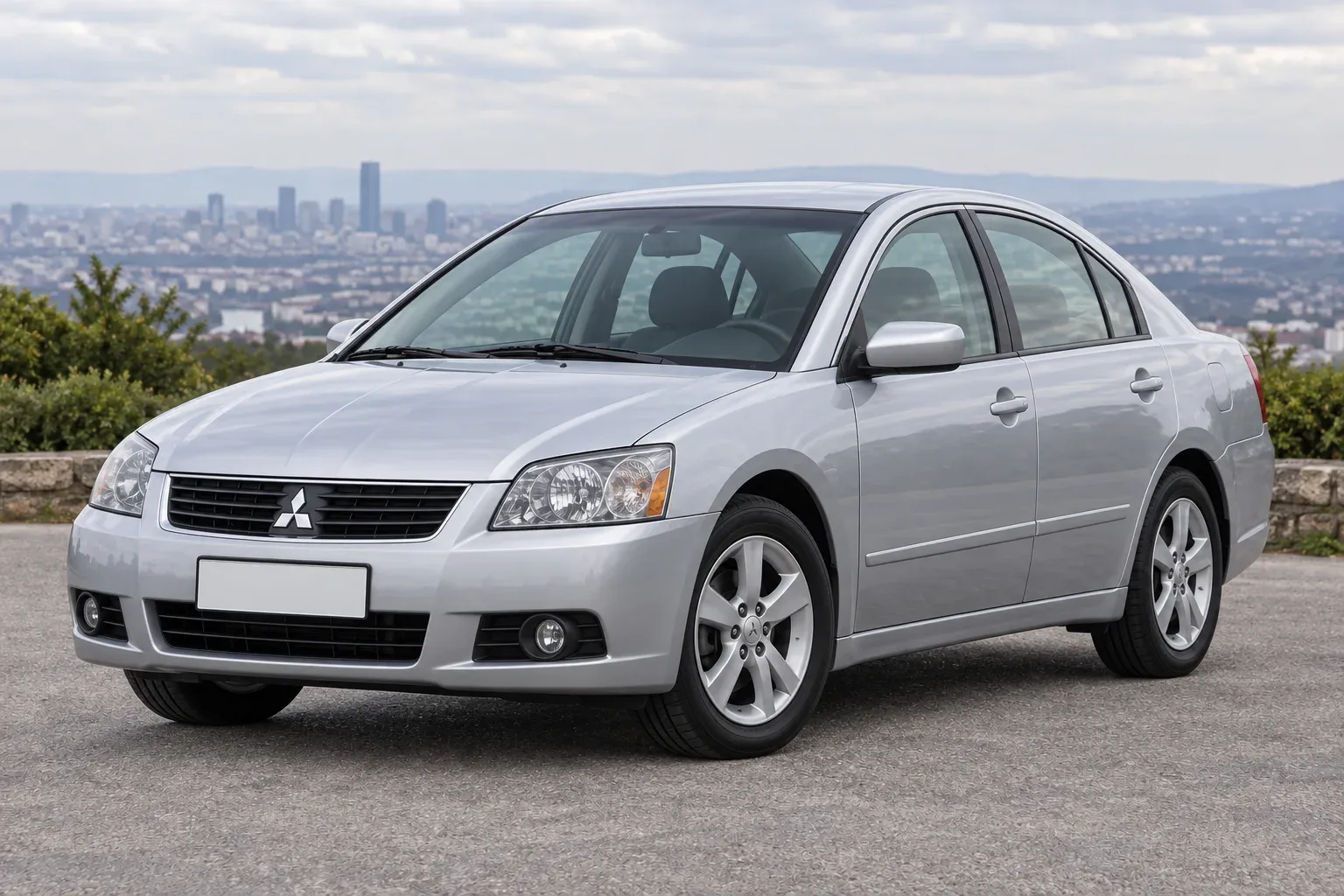
Once upon a time, in the late 1980s, the Mitsubishi Galant was one of the most "sports" sedans in its class. It offered thruster rear wheels and a powerful turbocharged version - VR4. Subsequent generations became more comfortable-oriented, and interest in the model fell markedly. A brief revival came in 1997, when the eighth Galant debuted with an attractive dynamic look. The car itself was not so interesting. The last Galant doesn't look as daring as he used to. It is built on the platform of Mitsubishi PS – shared with Mitsubishi Endeavor and Eclipse. Another Japanese sedan noticeably added in size, which has a positive effect on the internal dimensions. The width of the cabin increased to 145 cm, and the space between the backs of the first and second rows - up to 94 cm. However, the back sofa is not so spacious, and the three of us are close. There is a lack of higher quality materials inside. Plastic looks cheap, and it starts to creak over time. The American versions, in addition to the basic DE, received three more trim levels: ES, LS and sports GTS. The SE (Sport Edition) was replaced by the GTS after the restyling in 2008. The shape of the taillights has also changed. Six airbags and a full electric package were included in the list of standard equipment DE. The ES version is distinguished by body colored moldings, exterior mirrors and door handles. Modification LS acquired a driver's seat with an electric drive. Automatic climate control was only installed in the GTS, all others were equipped with conventional air conditioning. Of the assistance systems, only ABS with electronic brake force distribution (except DE) is provided. No stabilization system has been established. As for safety, the ninth Galant, according to the US Highway Traffic Safety Administration NHTSA, earned four stars. The sedan received similar ratings from the IIHS Insurance Institute for Road Safety.
2What buyers check
Engines
The DE and ES versions were equipped with a 4-cylinder 2.4-liter atmospheric (4G69) recoil of 160 hp, and the LS and GTS – a 3.8-liter V6 (6G75) / 230 hp (since 2008 258 hp). Russian Mitsubishi was completed exclusively with a gasoline four capacity of 158 hp. Both engines have a temporary type of HRM drive with a replacement interval of 60,000 km. 4G69 is an extremely reliable unit. Problems with it arise solely due to the fault of the owner, in particular due to late maintenance. Unlike its predecessor, the 4G64, there are no hydraulic compensators. Therefore, after every 100,000 km, the valve gap should be adjusted. It is carried out using adjusting screws. After 150-200 thousand km, oil may appear in candle wells. It is easy to eliminate the leak, and a set of new gaskets will need about 500 rubles. After a while, they can “blown out” oil caps, which contributes to an increase in oil consumption. For replacement, it is better to use the help of a car service. Many owners over time begin to notice a low-pressure oil alarm system burning in full-fire. It’s all about the sensor itself or its contacts. In the latter case, the disease manifests itself in wet weather or during rain. Moisture gets on the connector contacts. The sensor is better to replace - from 300 rubles. After 150-200 thousand km of attention will require a starter, generator, oxygen sensors and clogged catalyst. Most likely, due to the vibrations that have appeared, the rear support of the engine will have to be replaced - from 3,000 rubles. Top versions with a 3.8-liter V6 in Russia are extremely rare and there is little information on them.
Transmission
Mitsubishi Galant 9 engines were aggregated only with a 4-speed automatic (F4A4B), which, in combination with the V6, provided the possibility of manual gear selection. In 2008, the V6 was equipped with a 5-speed automatic transmission. The machine is very reliable. Remember to update the oil in the box every 60,000 km.
After 100,000 km, owners often notice the appearance of small tremors. The disease is not progressing, so there is no need to worry. Many machines have passed 250-300 thousand km without problems and repairs. By this time, you may need to replace the drives.
It is worth noting that automatic transmission, like many machines, does not like long towages. After such “exercises”, Galant is often sent to the service due to problems with the box.
Walking
The soft suspension absorbs most road bumps. On the front axle are the Macpherson racks, and on the rear - multi-pell construction. Fortunately, the elements of the chassis are quite hardy. Replacement of silent blocks or levers may be necessary only after 150-200 thousand km. But shock absorbers can flow after 100,000 km. After 100-150 thousand km, replacement of hub bearings is often required (from 3,000 rubles for an analog or 12,000 rubles for the original in the collection with a hub).
After 150-200 thousand km can sound pump hydraulic power. Repairs are usually not appropriate. A much more reliable option with replacement. The cost of the new pump is from 13,000 rubles.
The steering rack, as many modern car manufacturers have seen, is durable. Knocks can appear only after 200-250 thousand km, and even then, only on individual copies.
Typical problems and malfunctions
Body is not prone to corrosion. However, during the inspection, special attention should be paid to the interior of the doors, the hood and the thresholds. Sometimes there are red spots.
Sometimes after 100-150 thousand km there are problems with the air conditioner compressor - it starts to make noise or howl. The reason can be both in the coupling of the connection (from 10 000 rubles), and in the compressor itself (from 65 000 rubles). Often, the problem node can be repaired, which is much cheaper.
3Pre-purchase checklist
Engines
- Problems with it arise solely due to the fault of the owner, in particular due to late maintenance.
- It is easy to eliminate the leak, and a set of new gaskets will need about 500 rubles.
Transmission
- The disease is not progressing, so there is no need to worry. Many machines have passed 250-300 thousand km without problems and repairs.
- After such “exercises”, Galant is often sent to the service due to problems with the box.
Walking
- Replacement of silent blocks or levers may be necessary only after 150-200 thousand km.
- But shock absorbers can flow after 100,000 km. After 100,000 to 150,000.
- After 150-200 thousand km can sound pump hydraulic power. Repairs are usually not appropriate. A much more reliable option with replacement.
- Knocks can appear only after 200-250 thousand.
Typical problems and malfunctions
- However, during the inspection, special attention should be paid to the interior of the doors, the hood and the thresholds. Sometimes there are red spots.
- km problems with the air conditioner compressor - begins to make noise or howl.
- Often, the problem node can be repaired, which is much cheaper.
4Challenges of selling privately
Mitsubishi Galant does not suffer from any serious illness. The defects are usually related to age. However, in the case of repairs will have to pretty fork out – new original parts are often unreasonably expensive. Fortunately, there are plenty of substitutes in the market.
- Engines: Problems with it arise solely due to the fault of the owner, in particular due to late maintenance.
- Transmission: The disease is not progressing, so there is no need to worry. Many machines have passed 250-300 thousand km without problems and repairs.
- Driving: Replacement of Silentblocks or levers may be needed only after 150-200 thousand km.
- Typical problems and malfunctions: The body is not prone to corrosion.
Shows, bargaining and re-registration take time: buyers look, promise to think and disappear. Fair price after inspection closes the auction on the spot. If money is needed urgently, the purchase takes away waiting and repeat displays.
5How selling to us works
Leave a request with the car data. We will discuss the preliminary assessment and inspection. After checking the status and documents, we agree on the final price and terms of the transaction.