Peugeot 406
Valuation of the Peugeot 406 (1995–2004): condition, paperwork, inspection and terms of sale.
Indicative purchase price
Below market value
Final price agreed after inspection.
Value my car1Why buyers choose this model
The Peugeot 406 quickly gained recognition among motorists. Today, you can join the ranks of its owners for quite reasonable money. 406 became the main character of the famous trilogy of Luc Bessonne "Taxi". Is it a good alternative to Japanese and German competitors?
2What buyers check
Design and interior
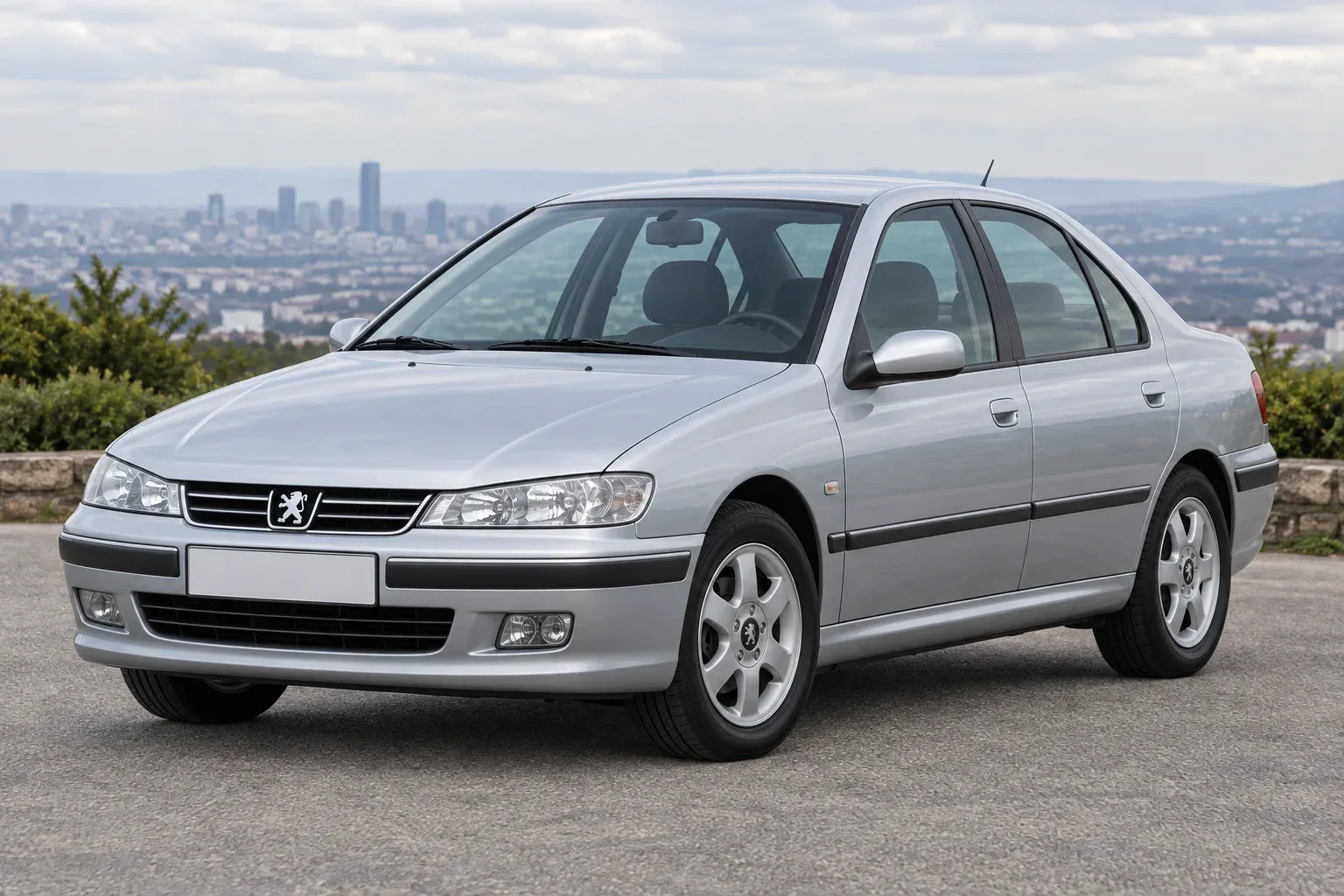
The exterior of the Peugeot 406 is a stylistic evolution of the equally legendary 405. Recognisable lines were successfully updated by designers: fashionable in the 80s, chopped forms gave way to rounded ones. Even today, the Frenchman looks very interesting against the background of more modern classmates. The 406 was available as an elegant sedan and a spacious wagon, which in the Peugeot nomenclature was listed as Break. The real work of art is a coupe, presented in 1997. The stylists from Pininfarina worked well on the appearance. In this price range, it is very difficult to find a more impressive car. Restyled models were held in 1998. As a result, the Peugeot 406 has acquired a more predatory front end look and several small stylistic changes. These updates bypassed the Coupe version. She waited for her facelift only at the turn of 20002 and 2003. The main modification was the front bumper, which took the form of a “broad smile”, which became a characteristic feature for all subsequent models of the brand, starting from 2004. The interior of the French car is really cozy. It can comfortably accommodate up to five people. But he lacks the charm that radiates the appearance. It's hard to pick on something inside. Ergonomics, quality of materials and assembly – everything is done at a good level. Quite often there are cars with a bright interior design, which significantly revitalizes the situation. The advantages include a rich standard equipment, especially younger copies. The competitors look much worse in this context.
Engines and transmission
As befits a serious middle-class representative, the Peugeot 406 offers a wide range of powertrains. The line of gasoline engines until 1997 was opened by an 8-valve 1.6-liter engine, and after 1999 - a 1.8-liter engine of the XU series with 90 and 110 hp. Later, it gave way to a more modern 115-horsepower unit with a working volume of 1.8 liters from the EW family.
The range of power units was expanded by 2.0 l engines (16V 132-136 hp, short-lived Turbo 145 hp and HPI 140 hp), 2.2 l (156 hp) and a top-end V6 3.0 l (190-204 hp), developed jointly with PSA and Renault.
Among the diesel modifications from 1995 to 1999, units with a turbocharger of 1.9 liters (90 hp) and 2.2 liters (131 hp) were available. Later, they gave way to HDi engines - 2.0 liters (90 and 110 hp) and 2.2 liters (131 hp) with a modern Common Rail injection system.
For a calm and guaranteed movement, a gasoline 1.8-liter engine, a reliable 1.9 TD and the weakest 2.0 HDi are quite enough. Offered before restyling gasoline unit with a working volume of 1.6 liters can hardly cope with the 406th.
Peugeot 406 is a front-wheel drive car. For the transmission of traction to the wheels is responsible 5-speed mechanics or 4-speed automatic.
Suspension
From the first kilometers it becomes obvious that the suspension of the "French" is set, first of all, for comfort. In fast turns, the body is noticeably tilted from side to side, and with a sharp slowdown, it strongly “pits with its nose.” The chassis coupe is tighter. And although it is still far from real sports cars, the coupe behaves very pleasantly and does not shake the soul out of passengers.
Typical malfunctions
Peugeot 406 is one of the few models from the banks of the Seine, which did not fit into the usual stereotypes concerning cars with the sign of the lion, which can sometimes pretty spoil the mood of owners. The most reliable were post-restyling modifications, in which engineers managed to get rid of a number of shortcomings. However, it should be understood that the 406th is not a crowbar horse and does not tolerate careless maintenance and care. Most power units are characterized by good reliability, but there are exceptions. 2.0 HPI with direct fuel injection should be avoided. The motor often causes problems. In diesel 2. 1 TD, the weak point is the TNVD pump. As with any diesel unit in HDi, you need to pay attention to the condition of the turbine, twin flywheel and nozzles, which are sensitive to fuel quality. Big problems can deliver versions equipped with a particulate filter. the 1.8-liter engine is famous for increased oil consumption. The stepper motor, pulley and valve of the exhaust gas recirculation system may fail. There are also leaks of oil from the engine and box. Gasoline engines tolerate the transition to gas well, but because of plastic collectors require the installation of a system with sequential gas injection. In the suspension, the struts and bushes of the transverse stability stabilizer and the silenth blocks of the rear suspension levers wear out most quickly. But in general, the elements of the chassis have a decent endurance. In cars equipped with diesel engines and a 3-liter V6, components of the brake system produce their life relatively quickly.
3Pre-purchase checklist
Typical malfunctions
- However, it should be understood that the 406th is not a crowbar horse and does not tolerate careless maintenance and care.
- Most power units are characterized by good reliability, but there are exceptions. 2 should be avoided.
- 0 HPI with direct fuel injection. The motor often causes problems. In diesel 2. 1 TD, the weak point is the TNVD pump.
- As with any diesel unit in HDi, you need to pay attention to the condition of the turbine, twin flywheel and nozzles, which are sensitive to fuel quality.
- Big problems can be delivered by versions equipped with a particulate filter.
- Fortunately, it is just annoying and does not require expensive repairs.
- A big plus is a good anti-corrosion protection of the body.
- The design of the car is not very complicated, which simplifies repair and has an insignificant effect on the owner’s wallet.
4Challenges of selling privately
The fact that the Peugeot 406 is a successful car helps to make sure numerous reviews of owners who say that they are ready to again decide to buy a French car. The cost of the car in the secondary market is in the range of 3000 – 5000 dollars. The price tag on the coupe version tends closer to the upper boundary.
- Design and interior: The exterior of the Peugeot 406 is a stylistic evolution of the equally legendary 405.
- Engines and transmission: As befits a serious middle-class, the Peugeot 406 offers a wide range of powertrains.
- From the first kilometers it becomes obvious that the suspension of the "French" is set, first of all, for comfort.
- Typical faults: 0 HPI with direct fuel injection. The motor often causes problems. In diesel 2. 1 TD, the weak point is the TNVD pump.
Shows, bargaining and re-registration take time: buyers look, promise to think and disappear. Fair price after inspection closes the auction on the spot. If money is needed urgently, the purchase takes away waiting and repeat displays.
5How selling to us works
Leave a request with the car data. We will discuss the preliminary assessment and inspection. After checking the status and documents, we agree on the final price and terms of the transaction.