
Porsche 911 997
Estimation of the Porsche 911 997 (2004-2012): condition, documents, inspection and conditions of sale of the car.
Indicative purchase price
Below market value
Final price agreed after inspection.
Value my car1Why buyers choose this model
The history of the Porsche 911 begins in the early 60s with the introduction of the 901. Since in the 20s of the XX century Peugeot had the exclusive right to use the digital designation with zero in the middle in the names of models, the Germans had to change the name of the sports car to 911.
2What buyers check
Review
The history of the Porsche 911 begins in the early 60s with the introduction of the 901. Since in the 20s of the XX century Peugeot had the exclusive right to use the digital designation with zero in the middle in the names of models, the Germans had to change the name of the sports car to 911. Over the years, with each successive generation, the car evolved technically, but the style remained true to tradition.
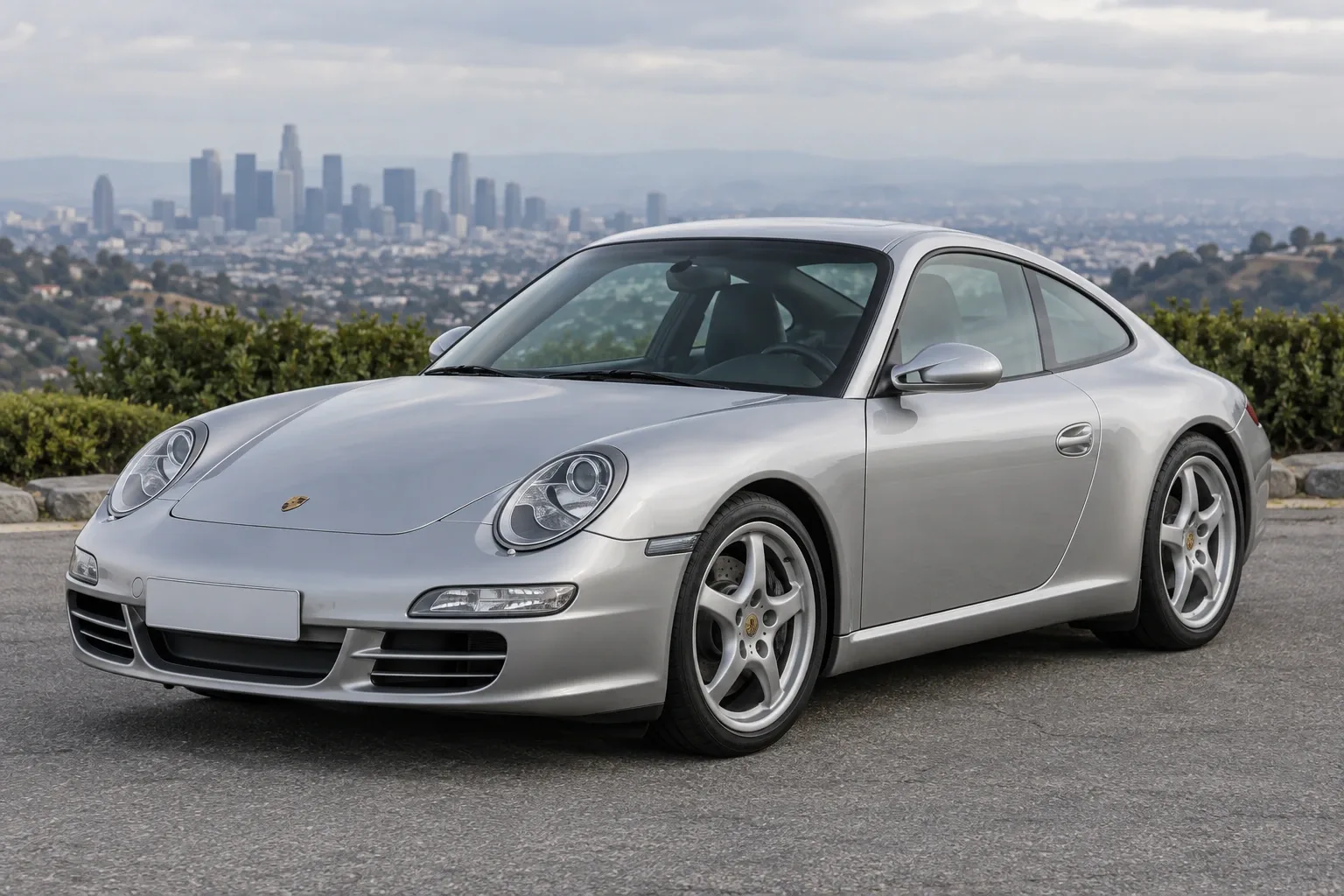
The 997 made its debut at the 2004 Frankfurt Motor Show, replacing the controversial 996. Taking into account the wishes of customers, the designers returned the headlights to their former style and shape. After the premiere, versions of the car gradually began to be offered, optimized for certain conditions - GT3, GT3 RS, Turbo GT2 and GT2 RS.
In 2009, the Porsche 911 was upgraded. What's changed? First of all, headlights, taillights, bumper. In addition to stylistic changes, the suspension was modified, the engine was strengthened, and the automatic transmission Tiptronic S was replaced by a robotic dual-clutch PDK. Since 2012, the production of separate versions of the 911 997 has been phased out, replacing them with new versions from the 991 generation.
Engines
As power units, only gasoline boxed engines were used. B6 3. 6 L (325-345 hp) 911 Carrera, 911 Carrera 4, 911
B6 3. 6 liters (415 hp) 911 GT3 / 911 GT3 RS
B6 3.6 liters of biturbo (480, 530-620 hp) 911 Turbo, 911 GT2, 911 GT2 RS
B6 3.8 liters (435-450 hp) 911 GT3, 911 GT3 RS
3.8 L B6 (355, 381, 385-408 hp) 911 Carrera, 911 Carrera 4S, 911 Carrera GTS
B6 biturbo 3.8 liters (500-530 hp) 911 Turbo, 911 Turbo S
In the case of the Porsche 911, there has never been, and hopefully never will be, any compromise. It is a sports car, just like its engines. We could write a separate article about each of them, but for now we will present them in general. Dynamics? Even laypersons know that Porsche leaves most cars at traffic lights. The base version accelerates to 100 km / h in just 5 seconds, and the fastest Porsche 911 does it in a little more than 3 seconds. That’s less than what the Nissan GT-R can do. Even the weakest engines allow you to reach a maximum speed of 280 km / h, and the top versions - 320-330 km / h. The weakest point of the Porsche engine is the intermediate bearing of the IMS shaft. Its destruction can cause serious damage to the engine. Fortunately, unlike its predecessor, the problem is not as large and has affected a small number of cars. Symptoms: uneven engine operation and metal sawdust on the oil filter. There are also some cases of cylinder damage. This time, however, the problem was a small number of Porsche 911s.
Technical features
The Porsche 911 engine is placed behind the rear axle. The drive, depending on the modification, can be both rear and full. There were three gearboxes to choose from: 6-speed manual, 5-speed automatic and 7-speed dual-clutch PDK. On the front axle of the Macpherson rack, and on the back a system of independent levers. Since EuroNCAP has not inspected the vehicle, the safety level is unknown.
Typical malfunctions
The 911 is a sight many potential buyers lose their minds. However, choosing a used car of this kind requires a cool head and attentiveness. Otherwise, you can get caught on a time mine that will quickly empty your wallet or, worse, drive you into debt.
What do you need to pay attention to? First of all, on the state of clutch and drive shafts. Not distinguished by the strength of the steering tips and thrusts, but these are not serious defects. It is also necessary to carefully examine the engine and transmission for leakage, especially around the main axis of the RMS (back crankshaft). In addition, there are oil leaks through the cooler oil (the fastening weakens) and problems with the cooling system (cracking of the pipes and failure of the pump).
Examining the car on the lift, pay attention to the condition of the Silent blocks of the rear suspension. Since the engine is behind, it is this part of the running gear that is subjected to faster wear. Control of the condition of springs and shock absorbers is another mandatory checkpoint.
What else could say no? For example, the head unit of the audio system, which stops returning disks. Porsche 911 owners often complain about noise from the speakers. Most often the reason for this is a faulty amplifier. A rather unpleasant problem is a leaky hatch on the roof. Sometimes the retractable cup holders or internal door handles cease to function, but these are mere trifles.
3Pre-purchase checklist
Review
- Since 2012, the production of separate versions of the 911 997 has been phased out, replacing them with new versions from the 991 generation.
Engines
- Fortunately, unlike its predecessor, the problem is not as large and has affected a small number of cars.
- This time, however, the problem was a small number of Porsche 911s.
- And yet, in most cases, engines deliver almost no problems with regular maintenance.
- Running over 250,000 km without malfunctions is no exception.
Technical features
- Since EuroNCAP has not inspected the vehicle, the safety level is unknown.
Typical malfunctions
- The 911 is a sight many potential buyers lose their minds.
- It is also necessary to carefully examine the engine and transmission for leakage, especially around the main axis of the RMS (back crankshaft).
- In addition, there are oil leaks through the cooler oil (the fastening weakens) and problems with the cooling system (cracking of the pipes and failure of the pump).
- Examining the car on the lift, pay attention to the condition of the Silent blocks of the rear suspension.
- Since the engine is behind, it is this part of the running gear that is subjected to faster wear.
- Control of the condition of springs and shock absorbers is another mandatory checkpoint.
- A rather unpleasant problem is a leaky hatch on the roof.
4Challenges of selling privately
The Porsche 911 997, although it managed to catch on in major Russian cities, is still the object of exhalation of many motorists and not only. When choosing and buying a car, you should not give yourself to emotions. A thorough inspection is very important. Otherwise, you will be required to visit car repair shops regularly.
In terms of reliability, the sports car is quite stable. According to the results of TUV inspections, the technical condition of the car is much better than comparable models of the same age. The body never has problems with rust due to galvanizing. Avoid any items imported from the United States. They are often rebuilt carelessly after an accident.
When purchasing a Porsche 911, you must be prepared for the high cost of operation. While the main components are not too expensive, you will have to drive to petrol stations relatively often and change tires, brake discs and pads regularly.
- Since 2012, the production of separate versions of the 911 997 has been phased out, replacing them with new versions from the 991 generation.
- Engines: Fortunately, unlike its predecessor, the problem is not as large and has affected a small number of cars.
- Technical features: Porsche 911 engine is placed behind the rear axle.
- Typical malfunctions: The sight of a 911 just by itself, many potential buyers lose their heads.
Shows, bargaining and re-registration take time: buyers look, promise to think and disappear. Fair price after inspection closes the auction on the spot. If money is needed urgently, the purchase takes away waiting and repeat displays.
5How selling to us works
Leave a request with the car data. We will discuss the preliminary assessment and inspection. After checking the status and documents, we agree on the final price and terms of the transaction.