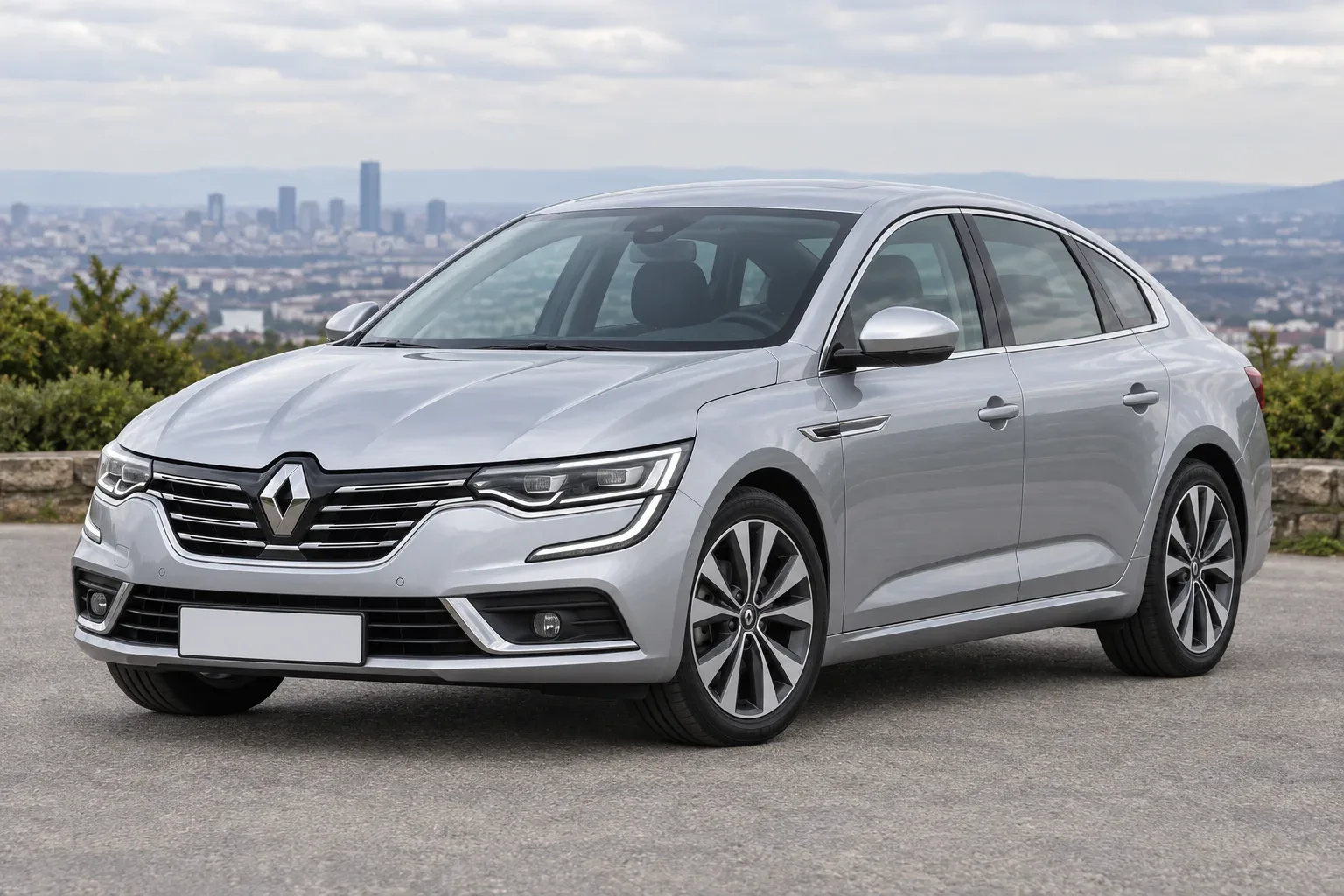
Renault Talisman
Valuation of the Renault Talisman (2015–2022): condition, paperwork, inspection and terms of sale.
Indicative purchase price
Below market value
Final price agreed after inspection.
Value my car1Why buyers choose this model
This guide is a detailed analysis of the reliability of the Renault Talisman (2015-2022). We collected all the main vulnerabilities of the nodes into one material, distributed the symptoms of breakdowns by real mileage, compiled a clear checklist of the inspection and calculated the cost of repairs. The analysis covers all model modifications: from 1.3/1.8 TCe petrol turbo engines to 1.5, 1.6 and 2.0 dCi diesel engines, which work in tandem with the EDC preselective robot or a rare manual box.
2What buyers check
Specification of the model (technical core)
• Gasoline engines: 1. 3 TCe (160 hp, H5Ht index) and senior 1. 8 TCe (225 hp, factory index M5P). • Diesel line: economical 1. 5 dCi (90-110 hp), complex 1. 6 dCi (130-160 hp) and resource 2. 0 dCi (160-190 hp). • Transmission: EDC robotic box (6 or 7 stages, dual clutch) or a complex 6 CI module built on a single MPP and a resource base model D in the body of a sedan and a roomy wagon (Sport Tourer). Passport clearance modest - from 135 to 140 mm. • Drive: classic front or advanced 4Control system, able to steer the rear axle. • Help for the Russian market: official dealers of Renault car in Russia did not carry, the entire fleet was driven by dealers from the secondary of Europe. Prices are widely scattered: live pre-restyling 2016-2017 can be found for 1 million rubles, and fresh updated versions of 2020-2022 will cost 2.5 million # # 1. 3 TCe (160 hp, H5Ht index)
• Reliability: ⁇ ⁇ ⁇ ⁇ ⁇ (3/5) • Weak spots: leaks from under the valve cover and glands after 50–100 thousand km, the death of the turbine after 100 thousand, as well as capricious thermostats and pumps at the same runs. City consumption is kept in the region of 9-11 liters per hundred. • Summary: the engine is quite suitable for purchase, if the previous owner changed quality oil every 7-10 thousand kilometers and can confirm this with order-outfits. The main financial risk is the price of the new turbocharger. #1.8 TCe (225 hp, M5P index)
• Reliability: ⁇ ⁇ ⁇ ⁇ (2/5) • Weaknesses: critical stretching and jumping of the HRM chain after 60-120 thousand km, destroying valves and pistons. After 80 thousand km, the engine begins to eat up oil, and with prolonged accelerations suffers from local overheating of the HBC. • Summary: we do not recommend buying this modification on the secondary. You can take a car only if the service book has a fresh mark on the replacement of the entire set of HRM. The engine requires too much maintenance. #1.5 dCi (90-110 hp)
• Reliability: ⁇ ⁇ ⁇ ⁇ ⁇ ⁇ (4/5) • Weaknesses: standard clogging of the particulate filter after 100-150 thousand km and natural age wear of the fuel system after 120 thousand kilometers. • Summary: ideal for those who are looking for maximum savings (the cost on the highway drops to 4.5 liters). The cast-iron cylinder block is practically eternal, but the dynamics of this engine are frankly lacking for a heavy business car. #1. 6 dCi Twin-Turbo (130-160 hp)
• Reliability: ⁇ ⁇ ⁇ ⁇ (2/5) • Weaknesses: the complex system of double sequential boosting Garrett is surrendered after 100-150 thousand km (turbines begin to drive oil, control valves fail). After 100 thousand “pour” nozzles, and because of the rare service, the risk of turning the rod liners is high. • Summary: this diesel is better to immediately exclude from the selection. Due to the dense layout in the under-hood space, any qualified intervention and repair of attachments will cost a fortune. ## 2. 0 dCi (160-190 hp)
• Reliability: ⁇ ⁇ ⁇ ⁇ ⁇ ⁇ ⁇ (4/5) • Weaknesses: only the predicted wear of the turbine bearings after 150-180 thousand km and typical problems with the particulate filter clogged from urban fuel. • Summary: the best and balanced choice among all diesel engines. The engine has a huge margin of safety on the iron and perfectly pulls a heavy car, fully compensating for a little more fuel consumption. # # Robotic gearbox EDC
The EDC’s highly selective robot requires thorough computer and bench diagnostics before buying a car. The first jerks are recorded by the owners after 60-100 thousand km. The original clutch rarely runs more than 80-120 thousand km, and the resource of the hydraulic unit (mechatronics) is limited to 100-150 thousand km. The rules of survival of the box: change the oil every 60,000 km run or strictly every three years. In winter, be sure to warm up the transmission in a gentle mode for the first few kilometers. In dead traffic jams, go to manual mode or use the parking brake so that the electronics do not open the discs in vain, causing them to wear faster. ## Mechanical gearbox (6-speed)
Reliability: ⁇ ⁇ ⁇ ⁇ ⁇ ⁇ ⁇ (4/5) • Resource map: there is nothing to break here. The only element that will require replacement after 100-150 thousand km is the clutch kit. Costs for parts and work will be from 40 000 to 70 000 ⁇ . • Summary: the most reliable and hassle-free option for a used car, but it is almost impossible to find a Talisman on the “handle” on the market - such modifications were ordered in Europe by units. # # # Stretching and jumping the HRM chain on a gasoline 1. 8 TCe
The chain of the M5P engine is extended after 60,000 - 120,000 km. The main symptom of breakdown is a distinct metal noise, clanging and roaring from the under-hood space during cold start-up, as well as a floating idle needle. If you ignore these sounds, the circuit will jump, the pistons will meet the valves, and the engine will go to the landfill. Preventive replacement of the chain kit with tensioners and sedators costs 80,000 – 150,000 ⁇ . To avoid early repairs can only be frequent oil renewal (once in 7-10 thousand km) and a calm style of driving without sharp starts from the spot. # # Refusal of the turbocharger at 1. 3 TCe
The Garrett turbine on the 1.3 TCe gasoline engine fails after 80,000 – 120,000 km of run. You will immediately understand that the knot has given up: when you try to accelerate, the car begins to frankly dull, blue oil smoke falls from the silencer, and Check Engine lights up on the dashboard. Replacing the turbine with a new one will take 60,000 – 100,000 ⁇ from the budget. Prolong the life of the knot helps the banal rule: do not shut down the engine immediately after a dynamic trip, let it work for idle 1-2 minutes so that the compressor bearings have time to cool down. # # Foot oil leaks (1. 3 TCe)
Oil leaks through the drying of the valve cover and the shafts on the H5Ht engine develop after 50,000 – 100,000 km. Owners begin to complain about oil stains under the car and the persistent smell of burning in the cabin due to the grease hitting the red-hot exhaust manifold. To change the gasket costs 15 000 – 30 000 ⁇ , but the update of the glands due to the difficulty of access will cost already in 20 000 – 40 000 ⁇ . Leaks should be treated immediately when the first traces of fogging appear, without waiting for the oil level to fall. ## Critical clogging of the DPF particulate filter on diesel engines
The Diesel Talisman soot filter (DPF) is clogged tightly after 100,000 – 150,000 km. The problem is exacerbated if the car is only riding short city routes. The car loses traction, starts to consume more fuel, and automatic regeneration stops turning on, as reported by a burning DPF error. Forced chemical washing with filter removal costs on the service of 15 000 – 30 000 ⁇ . If the honeycombs are completely melted, buying a new DPF will cost an astronomical 80,000-150,000 ⁇ . Prevention is simple: at least once a week, go on the track and let the car shit at a stable speed, without interrupting the running self-cleaning cycle. ## Failure of fuel injectors on diesel 1. 6 dCi
The fuel equipment of Delphi and Bosch on the 1.6 dCi diesel engine requires repairs after 100,000 – 120,000 km. The systems are extremely sensitive to the quality of the solarium. When worn, the engine begins to tread appreciably, thick black smoke comes from the exhaust pipe, and the control unit fixes the P0200 error. Buying and installing just one new injector costs 25,000-40,000 ⁇ . In order not to change them with the whole set, refuel only at proven branded filling stations and reduce the interval of replacing the fuel filter by half. ## Luft impellers of the electric fan cooling system
The plastic sleeve of the fan axis wears out after 100,000 – 130,000 km. Because of this, there is a strong backlash of the impeller. Turning on, the fan begins to roar and vibrate strongly, and the motor in city traffic jams instantly overheats. A new fan assembly costs 20,000 – 40,000 ⁇ . Check the backlash of the axle with your hands at each TO, so as not to boil antifreeze at the most inopportune moment. # # Wear elements and failures of the robotic EDC gearbox
The EDC’s highly selective dual-clutch robot requires attention after 60,000 to 100,000 km. The fault is manifested by hard jerks, kicks and vibration on the body when moving from the second gear to the third or when starting in traffic jams. Usually, the natural wear of the clutch package (turnkey replacement costs 80,000 – 120,000 ⁇ ) or burnout of the mechatronic board due to overheating of the oil is to blame. Repair or complete restoration of the hydroblock will cost another 80,000 – 160,000 ⁇ . To make the box live longer, change the transmission fluid strictly every 60,000 km, warm the robot in the winter before start and use a handhold in congestion to protect the discs from micro-slips. ## Degradation of the AGM battery
AGM standard battery loses capacity and “dies” after 40 000 – 80 000 km (approximately in 3-5 years). The Talisman’s onboard network is literally stuffed with electronics that land a power source. Once the battery degrades, the control units go crazy, giving away an avalanche of false error codes across all systems. So the battery wear instantly causes false errors on the brakes, multimedia and climate due to the drawdown of voltage in the network during start-up. Replacing the battery with a certified AGM analogue (60–70 A·h) together with the firmware of the new unit in the on-board computer will cost 10,000–40,000 ⁇ . If you plan to leave the car in the parking lot for longer than a week, be sure to connect an external charger. ## Failure to recognize the electronic key card
The French brand key card breaks down after 30,000-70,000 km on frosty days. The machine simply stops responding to the buttons, and when you try to start on the screen lights up the inscription “map not detected”. Usually inside the board falls off the power contacts from mechanical shocks. Smearing the native key costs 5,000 – 10,000 ⁇ , and binding a new duplicate will cost at least 8,000 ⁇ . Tip one - protect the card from falls and always carry a spare verified key. ## Multimedia complex R-Link 2
The screen of the head unit often freezes, reboots or completely goes out at runs of 50-100,000 km. Sometimes the problem is solved by a banal update of software and configuration for unofficials for 5,000 – 10,000 ⁇ . If the control unit burned out hardware, buying and replacing used element will require from 30 000 to 50 000 ⁇ .
Stabilizer racks: front racks run about 40-60 thousand km. Replacement of parts with a pair will cost 5,000 – 10,000 ⁇ . • Stabilizer bushes: surrender to 60–80,000 km, giving themselves a characteristic creak and knock. Replacement with work costs 3,000 – 7,000 ⁇ . • Adjustable shock absorbers (system 4Control): the resource of the original racks over 80–120,000 km. There are no quality substitutes on the market at all, and the purchase of only one original shock absorber will result in the amount of 50,000 ⁇ . # # The condition of the body and paintwork
The factory paint of Renault is thin and weakly resists stones flying from the road. The first chips on the hood, bumper and front pillars of the roof appear after 20,000 km. If you do not paint these places in time, then after 60,000 km, chips begin to bloom with surface rust. Local quality color of one body element on the service costs 5,000 – 20,000 ⁇ , and full protective anticorrosion treatment of the bottom and hidden cavities will pull 15,000 – 30,000 ⁇ . # The algorithm of checking Renault Talisman before buying (check list)
Documentary control: mandatory verification of European service history by VIN, verification of legal purity by Russian CTC / PTS databases and inspection of the readability of numbers on the body. valve timing rating (for the engine 1. 8 TCe): start the engine strictly on cold. Listen, is there a metal clang chain first seconds of operation and whether the rpm is stable. Test drive of the gearbox: check the smoothness of the switching of the EDC robot in all modes. There should be no pushes and hovers when switching from 2nd to 3rd gear and when turning on the reverse.
3Pre-purchase checklist
1.8 TCe (225 hp, M5P index)
- • Summarize: we do not recommend buying this modification on the secondary.
1.5 dCi (90-110 hp)
- Natural age wear and tear of the fuel system after 120 thousand kilometers.
1.6 dCi Twin-Turbo (130-160 hp)
- km (turbines start driving oil, valves fail).
- Due to the dense layout in the hood space, any qualified intervention and repair of attachments will cost a fortune.
2.0 dCi (160–190 hp)
- Reliability: ⁇ ⁇ ⁇ ⁇ ⁇ ⁇ ⁇ (4/5) • Weaknesses: only the predicted wear of the turbine bearings after 150-180 thousand.
- km and typical problems with the soot filter clogged from the city fuel.
EDC robotic transmission
- The EDC’s highly selective robot requires thorough computer and bench diagnostics before buying a car.
- In dead traffic jams, go into manual mode or use the parking brake so that the electronics do not open the discs in vain, causing them to wear faster.
Mechanical transmission (6-step)
- Summary: the most reliable and trouble-free option for a used car, but it is almost impossible to find a Talisman on the “pen” on the market - such modifications were ordered in Europe by units.
Stretching and jumping of the HRM chain on the gasoline 1.8 TCe
- Preventive replacement of the chain kit with tensioners and sedators costs 80,000 – 150,000 ⁇ .
- Premature repairs can only be avoided by frequent oil renewal (once in 7-10 thousand).
Turbocharger failure at 1.3 TCe
- 3 TCe fails after 80,000 to 120,000 km of run.
- Replacing the turbine with a new one will take 60,000 – 100,000 ⁇ from the budget.
Engine oil leaks (1.3 TCe)
- Leaks should be treated immediately when the first traces of fogging appear, without waiting for the oil level to fall.
Critical clogging of DPF particulate filter on diesel engines
- The problem is exacerbated if the car is only riding short city routes.
Failure of fuel injectors on diesel 1.6 dCi
- 6 dCi requires repairs after 100,000 – 120,000 km.
- When worn, the engine begins to tread appreciably, thick black smoke comes from the exhaust pipe, and the control unit fixes the P0200 error.
- In order not to change them with the whole set, refuel only at proven branded filling stations and reduce the interval of replacing the fuel filter by half.
Luft of the electric fan of the cooling system
- Because of this, there is a strong backlash of the impeller.
- Check the backlash of the axis with your hands at each TO, so as not to boil antifreeze at the most inopportune moment.
Element wear and failure of the EDC robotic gearbox
- The fault is manifested by hard jerks, kicks and vibration on the body when moving from the second gear to the third or when starting in traffic jams.
- Usually, the natural wear of the clutch package (turnkey replacement costs 80,000 – 120,000 ⁇ ) or burnout of the mechatronic board due to overheating of the oil is to blame.
- Repair or complete restoration of the hydroblock will cost another 80,000 – 160,000 ⁇ .
Degradation of the AGM battery
- So the battery wear instantly causes false errors on the brakes, multimedia and climate due to the drawdown of voltage in the network during start-up.
- Replacing the battery with a certified AGM analogue (60–70 A·h) together with the firmware of the new unit in the on-board computer will cost 10,000–40,000 ⁇ .
Failure to recognize the electronic key card
- The French brand key card breaks down after 30,000-70,000 km on frosty days.
Multimedia complex R-Link 2
- Sometimes the problem is solved by a banal update of software and configuration for unofficials for 5,000 – 10,000 ⁇ .
- If the control unit burns out hardware, buying and replacing used element will require from 30 000 to 50 000 ⁇ .
Suspension elements
- Replacing parts with a pair will cost 5,000 – 10,000 ⁇ .
- It is a mile away, giving itself a characteristic creak and knock.
- Replacing with work costs 3,000 – 7,000 ⁇ .
Condition of body and paintwork
- The first chips on the hood, bumper and front pillars of the roof appear after 20,000 km.
- If you do not paint these places in time, then after 60,000 km, chips begin to bloom with surface rust.
- Local quality color of one body element on the service costs 5,000 – 20,000 ⁇ , and full protective anticorrosion treatment of the bottom and hidden cavities will pull 15,000 – 30,000 ⁇ .
Renault Talisman’s pre-purchase verification algorithm (checklist)
- Documentary control: mandatory verification of European service history by VIN, verification of legal purity by Russian CTC / PTS databases and inspection of the readability of numbers on the body.
- Test drive of the gearbox: check the smoothness of the switching of the EDC robot in all modes.
- Inspection of the chassis: detailed inspection of the anthers and mandatory travel on irregularities to check the knocks of the stabilizer racks (typical for runs of 40-60,000 km).
- Body revision: measurement of the thickness of the LCP thickness with a thickness gauge, search for chips (appear after 20 thousand).
- km) and traces of rust on the arches and edge of the bonnet (after 60 thousand km).
- Visual inspection of the exhaust - when accelerating, there should be no gray or thick black smoke.
Operational errors leading to premature breakdowns
- • Violation of maintenance intervals: oil replacement every 15-20 thousand km and the use of cheap analogues are guaranteed to finish the turbine by 80-100,000 km.
- Ignoring transmission symptoms: Driving with an EDC kicking robot quickly finishes off the mechatronics, turning a minor problem into repairs at a cost of 80,000 ⁇ .
- • Lack of body care: clogging into small chips triggers a corrosion process that will then require body repairs costing from 50,000 ⁇ .
- • Short city trips by diesel: the refusal of country trips completely clogs the DPF particulate filter on runs up to 100,000 km.
- • Untimely update of the valve timing drive: refusal of preventive replacement of the noisy chain by 1.
- 8 TCe entails its jump and expensive repairs of the cylinder head price from 150 000 ⁇ .
Frequently Asked Questions (FAQ)
- Q: Is the Talisman body prone to corrosion?
- A: Yes, if you do not localize the chips of paint (which appear on the hood after 20,000 km of run), then after 60,000 km in their place, rust foci are guaranteed to develop.
- ) is not worth buying because of the huge cost of maintenance and repair of the double boost system. It is better to pay for a reliable 2.0 dCi.
- Q: How often should I update the oil in the EDC PPC?
4Challenges of selling privately
Buying a Renault Talisman on the secondary is economically justified only if you have a free budget of 1-2 million rubles, are looking for a comfortable, rare and packed with options D-class car, have a profile Renault service nearby and immediately lay about 50 000 – 150 000 rubles for the elimination of starting joints used car. The ideal choice with a gasoline engine is modifications with 1.3 TCe, with a diesel engine - 2.0 dCi.
It is better to abandon the car immediately if you are looking for the option “buy and forget about repairs”, live in a region with fierce winters (electricians and robots do not like this), or are considering buying a modification with a problematic 1.8 TCe gasoline and a capricious 1.6 dCi Twin-Turbo diesel engine.
- Model specification (technical core): • Gasoline engines: 1. 3 TCe (160 hp, H5Ht index) and senior 1. 8 TCe (225 hp, factory index M5P). • Diesel line: economical 1. 5 dCi (90-110 hp), complex 1. 6 dCi (130-160 hp) and resource 2. 0 dCi (160-190 hp).
- Algorithm check Renault Talisman before purchase (check-list): Inspection of the chassis: detailed inspection of the anthers and mandatory travel on irregularities to check the knocking of the stabilizer racks (typical for runs 40-60,000 km).
- Violation of maintenance intervals: oil replacement once every 15-20 thousand km and the use of cheap analogues are guaranteed to finish the turbine by 80-100,000 km.
- Frequently Asked Questions (FAQ): Q: Is the Talisman body prone to corrosion?
Shows, bargaining and re-registration take time: buyers look, promise to think and disappear. Fair price after inspection closes the auction on the spot. If money is needed urgently, the purchase takes away waiting and repeat displays.
5How selling to us works
Leave a request with the car data. We will discuss the preliminary assessment and inspection. After checking the status and documents, we agree on the final price and terms of the transaction.