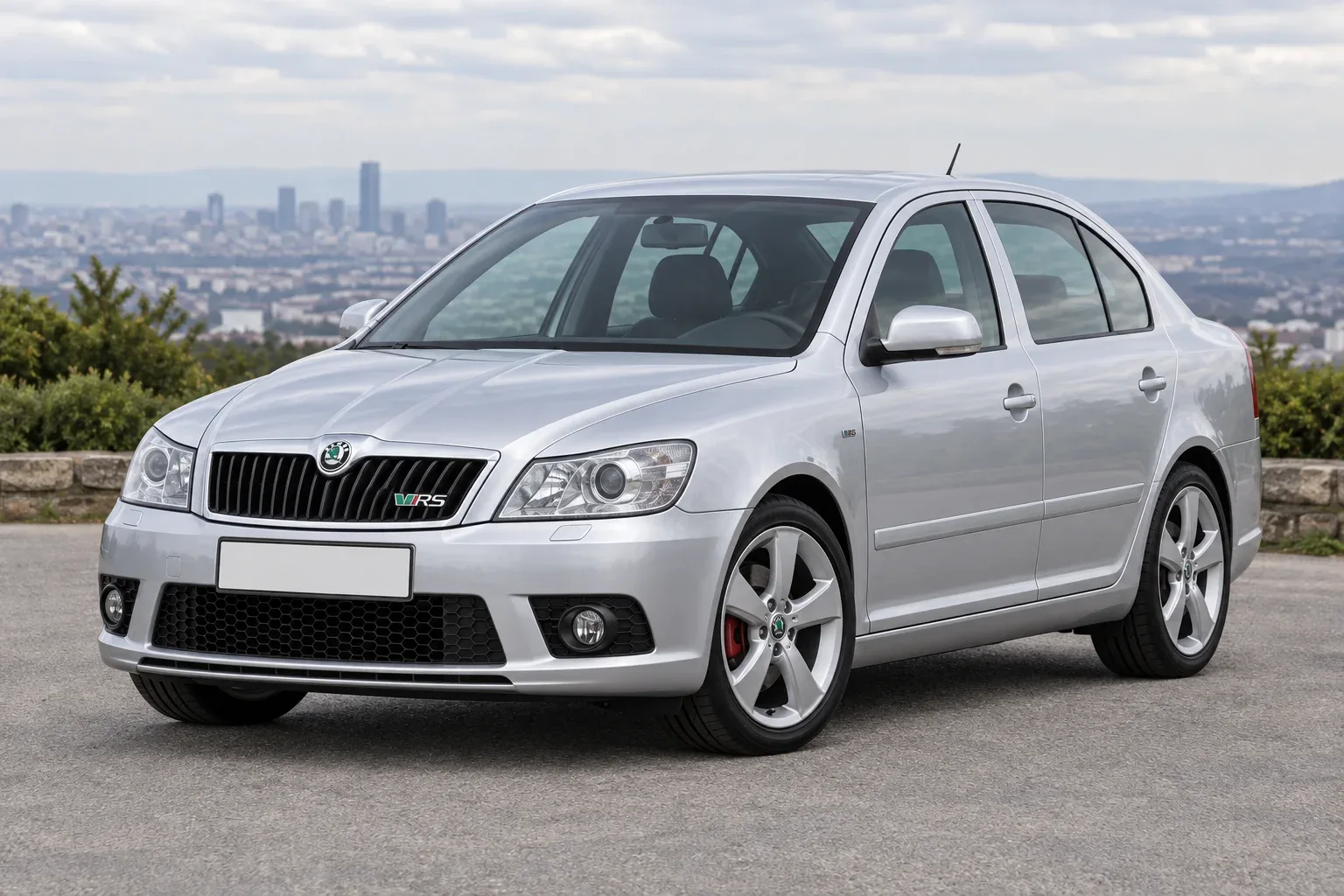
Škoda Octavia RS 2 / A5
Valuation of the Škoda Octavia RS 2 / A5 (2005–2013): condition, paperwork, inspection and terms of sale.
Indicative purchase price
Below market value
Final price agreed after inspection.
Value my car1Why buyers choose this model
The second generation Skoda Octavia is one of the most popular cars in the secondary market. The culmination version of the RS is certainly not as popular. Many people consider it a true sports car. In fact, this is a very ordinary car with a spoiler and RS badge.
2What buyers check
It's going well, but unsportsmanlike.
The ŠKODA OCTAVIA chassis has always worked well, and even handling is considered quite acceptable. However, in the second generation RS no longer the feedback that could boast of the sports model of the first generation. However, on a quality coating with good tires, the Octavia MS is operated easily and effortlessly. The car is stable, obedient and firmly keeps the intended trajectory.
The second-generation Octavia has been heavily criticized for its noisy chassis and hum from the rear wheels. The rest of the car has a pleasant atmosphere. It is especially calm inside when a 2.0 TSI petrol engine is running under the hood. The diesel engine is thundering a little. Compared to the civilian version, the MS exhaust has a more pronounced sound.
2.0 TSI is content with small
Fuel consumption of a gasoline turbo engine is pleasantly surprising. On the highway, it is easy to get a result of 6.5 liters. Even if you regularly overtake, the appetite does not exceed 8 liters. But once you stop complying with the permitted restrictions, the onboard computer readings begin to quickly crawl upwards, stepping over the threshold of 10 liters.
What to look for?
The longevity of the ŠKODA Octavia RS depends largely on the owner’s departure. Timely serviced car without a "tune" will pass hundreds of thousands of kilometers without any problems. Therefore, attention should be paid primarily to the general condition and service history, and not to the mileage, which is easy to twist.
Engines
The first RS (since October 2005) was equipped with a 2.0 TFSI. In April 2006, the engine line was replenished by a 2-liter turbodiesel. After restyling in 2008, the 2.0 TFSI gave way to the 2.0 TSI. 2.0 TFSI series EA 113 is equipped with a temporary type of HRM drive, which should be changed every 60,000 km. TFSI is fuel-requiring. It is designed for 98th and consumes about 10 liters per 100 km. Technically, the engine is very reliable and has a large reserve for "tuning". The unit can be "inflated" to almost 300 hp. The only weak point is the turbocharger (from 46 000 rubles). His body could burst along the bypass channel. The car, of course, will not lose the ability to move, but the performance of the engine will fall significantly. The service recommendations for this engine are quite simple. It is necessary to regularly change the oil, refuel with high-quality gasoline and not “rape” the engine. Do not forget about cooling the turbine after high-speed trips. TFSI is one of the most reliable options available in the RS, although not the most economical. 2. 0 TDI PD16 (with pump nozzles) - exotic for our market. Unlike the 2.0 TFSI is the most problematic unit. 16-valve TDI PD never equipped with a particulate filter, but in the RS it was installed mandatory. Here, the DPF filter is often a cause for concern, which is why many owners simply got rid of it. But this is trifles compared to unreliable piezo nozzles Continental (from 47 000 rubles).
Transmissions
The 2.0 TFSI engines were paired with only 6-speed mechanics. All other units, in addition to mechanics, were combined with a 6-speed robot DSG.
The manual transmission is quite reliable, but requires quite frequent clutch replacement, especially in a pair with a diesel unit (from 20,000 rubles per set).
The automated dual clutch DSG transmission is quite reliable. Its clutch works in an oil bath, so that it is constantly cooled and steadfastly tolerates pushing in city traffic jams. The main thing is to change the oil every 40-60 thousand km. When frequent movement in the city or working in manual mode, the interval of replacement of working fluid should not exceed 40 000 km.
What else is he preparing for?
First of all, you will have to put up with the relatively frequent suspension repair and rapid wear of the brakes. However, much depends on the manner of driving and the roads themselves. In general, the RS is a reliable car, the longevity of which determines the care of the owner.
3Pre-purchase checklist
What to look for?
- Timely serviced car without a "tune" will pass hundreds of thousands of kilometers without any problems.
- Therefore, attention should be paid primarily to the general condition and service history, and not to the mileage, which is easy to twist.
Engines
- The TFSI series EA 113 is equipped with a temporary type of HRM drive, which should be changed every 60,000 km. TFSI is fuel-requiring.
- The car, of course, will not lose the ability to move, but the performance of the engine will fall significantly.
- It is necessary to regularly change the oil, refuel with high-quality gasoline and not “rape” the engine.
- 0 TDI PD16 (with pump nozzles) - exotic for our market. Unlike the 2.0, the TFSI is the most problematic unit.
- In addition, there are problems with the drive of the timing, cracking the head of the block, and the engine itself is very sensitive to the quality of oil.
- Because of the unsightly picture, the manufacturer hastened to replace the problematic diesel, without even waiting for restyling. In September 2008, 2 was proposed.
- Among the less significant problems, there is a short service life of the crankshaft pulley (from 5 000 rubles).
- Leaks occur most often due to loss of tightness of the EGR cooler.
- Mechanics recommend completely replacing the chain drive of the valve timing before reaching 120,000 km.
What else is he preparing for?
- First of all, you will have to put up with the relatively frequent suspension repair and rapid wear of the brakes.
4Challenges of selling privately
If you want a real sports car, you probably won’t buy an Octavia RS. However, if you want to buy a practical car that will be if not sporty, but at least fast and dynamic, then "ERS" is definitely the right choice. Avoid the problem 2.0 TDI PD diesel. Otherwise, if you strictly follow the service recommendations, there is nothing to be afraid of. The main advantage of the ŠKODA Octavia RS is that despite its sporty character, it remains an extremely versatile family car.
- It goes well but unsportsmanlike: Skoda Octavia's chassis has always worked well and even handling is considered quite acceptable.
- 2.0 TSI is content with small: The fuel consumption of a gasoline turbo engine is pleasantly surprising.
- Timely serviced car without a "tune" will pass hundreds of thousands of kilometers without any problems.
- Engines: The car will not lose its ability to move, but the performance of the engine will fall significantly.
- Transmissions: Engines 2.
- What else is being prepared for?: First of all, you will have to put up with the relatively frequent suspension repair and rapid wear of the brakes.
Shows, bargaining and re-registration take time: buyers look, promise to think and disappear. Fair price after inspection closes the auction on the spot. If money is needed urgently, the purchase takes away waiting and repeat displays.
5How selling to us works
Leave a request with the car data. We will discuss the preliminary assessment and inspection. After checking the status and documents, we agree on the final price and terms of the transaction.