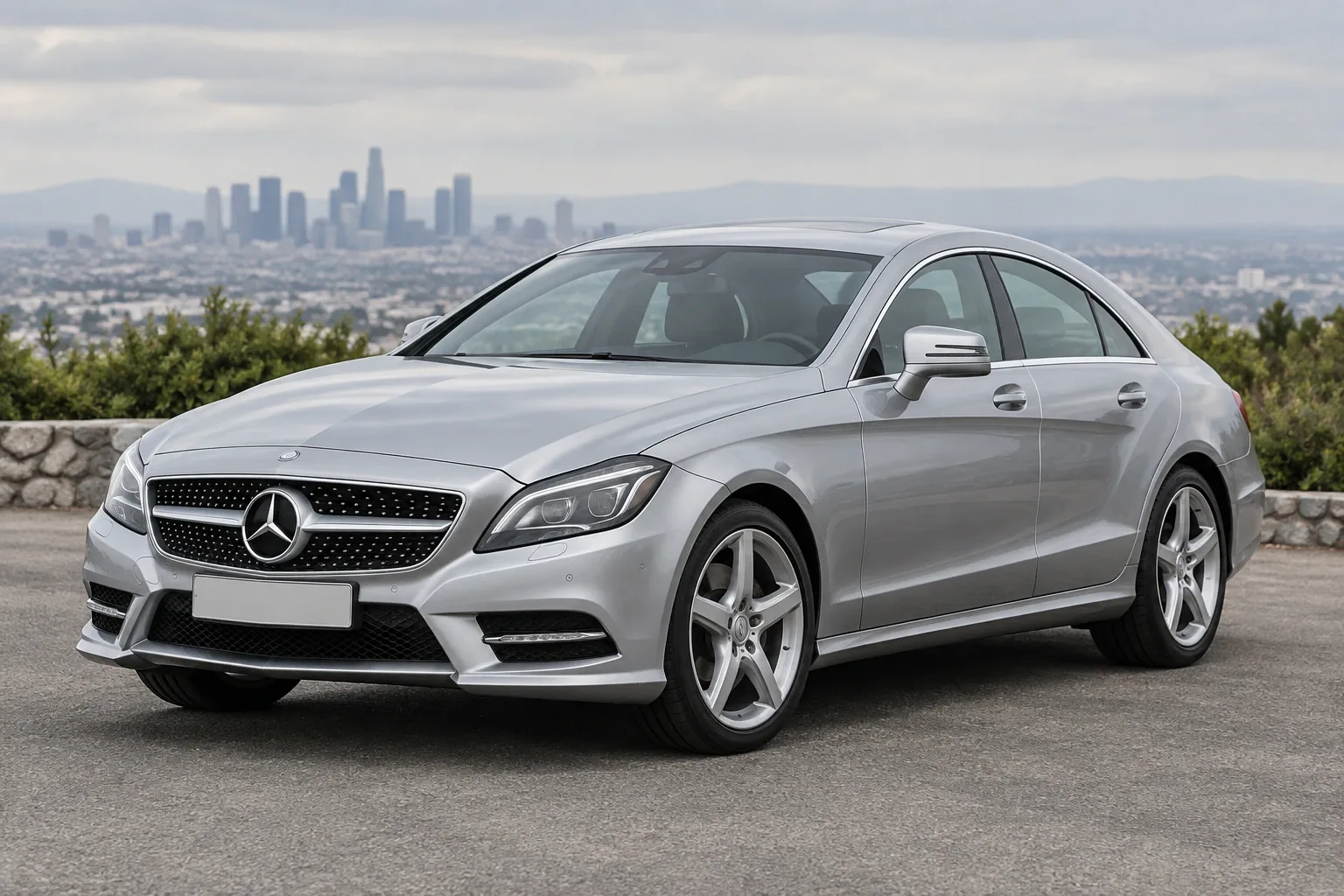
Mercedes-Benz CLS C218/X218
Assessment of the Mercedes-Benz CLS C218/X218 (2011–2018): condition, documents, inspection and conditions of sale of the car.
Indicative purchase price
Below market value
Final price agreed after inspection.
Value my car1Why buyers choose this model
The Mercedes CLS, nicknamed the “Banana” for its silhouette, popularized the four-door coupe class. He has been monopoly on it for years. This advantage was lost during the second generation (2011-2018). Worse, competition has grown within the brand - the cheaper and more compact CLA has snatched the idea of a Shooting Brake wagon. The fact that the advantage of the first generation is not passed on, Mercedes knows firsthand. When the company released its first CLS (internally called C219) in 2004, based on the E-Class (then W211), it attracted widespread approval. The unique design of the sporty, low-planted four-door coupe with frameless windows and four individual seats for a while became a fashion icon, but it suffered a traditional fate: at first everyone wanted it, and then almost no one wanted it. Today, the first version of the CLS is more associated with tracksuits and gold chains than with a prestigious car. So if you want to enjoy the admiring looks, you’ll have to at least consider the second-generation C218 (2011-2018). In addition, there is a much more diverse choice of options - four-cylinder diesel engines, 4Matic all-wheel drive and a sleek Shooting Brake wagon (X218, 2013-2018) were added. The wagon is practical enough, only if it does not have a strange boardwalk. The wood-lined boot floor in the style of a luxury yacht is an exclusive detail that shoppers can find in a Rolls Royce or Bentley today. It’s a very impractical thing, but it’s definitely going to be a collectible in the future. In real life, it is more likely to be found in top models, including AMG.
2What buyers check
Gasoline
The only engine without turbocharging. It has direct fuel injection, but surprisingly, it is not the old M272 "allusile" of the 350 CGI series (familiar to the first generation of the CLS and the early generation of the E-Class W 212), but a brand new M276 with reduced cylinder collapse (60° instead of the previous 90°) and cast iron cartridges in an aluminum block. He does not know the wear of the cylinders, but be ready to replace worn-out chains of the timing system on the trains. Consumption - 10 liters, exclusively rear-wheel drive and 7G-Tronic transmission.
Also M276, but already supercharged (biturbo) and with cylinders treated with an innovative nanocoating (iron-carbon antifriction layer). It works perfectly and no faults have been heard so far, but a representative sample of high-mileage cars is still missing. The transmission is the new 9G-Tronic.
Extremely expensive to repair everything you can, especially when bullies in cylinders. There's two gearboxes. Old version with 7G-Tronic, updated with 9G-Tronic.
The Brutal M157 V8 is essentially a hand-assembled, supercharged and better cooled M278. The cost of ownership is in line with the previous purchase price, so as with all premium sports derivatives, this car is primarily for first-time owners. There were three options with 525, 558 and 585 hp (since 2013 for the top-end configuration of the 63 "S" AMG 4Matic).
Diesel
CLS 220d/220 BlueTec (2.1, R4/16V, 2014-2018)
A weaker version of the twin-turbo four-cylinder diesel came here after the facelift, so it now has AdBlue, a new BlueTec model designation, and a 9-speed automatic. The engine itself is not bad, it is quiet on the highway, pulls well from the bottom and consumes six liters at low speed. But the CLS was more for showcasing money and style, with most buyers looking for higher scores.
CLS 250 CDI/250 BlueTec (2.1, R4/16V, 2011-2014/2014-2018)
The engine is the same (and the same rare), only more powerful and reliable. Up until the summer of 2014, versions with the CDI badge didn’t need urea yet and always had a 7G-Tronic box. After facelift Euro 6 received 9G-Tronic.
CLS 350 CDI/350 BlueTec (3.0, V6/24V, 2011-2014/2013-2018)
The most common choice. Excellent traction, quiet running and consumption of about eight liters. It is a pity that in the restyled versions, you can no longer find a version without urea. Before restyling, it was combined with the automatic transmission 7G-Tronic, after restyling - with 9G-Tronic.
Automatic.
With the younger 9-speed 9G-Tronic machine offered on some post-facelift modifications, there are no noticeable problems so far, but any parts for it won’t be cheap. The hydrodynamic converter (hydrotransformer) that wears out over time will cost more here than for the 7G-tronic.
The top versions of AMG received a special version of the box, created on the basis of 7G-Tronic. Instead of a hydrodynamic converter, a wet multi-plate clutch is used. The cost is one-third of the cost of the 9G-Tronic hydraulic transformer.
Walking
The second CLS technology replicates the W212 generation E-Class (2009-2016). That is, it has a simplified front suspension, but paradoxically, more accurate steering and better suspension comfort than its predecessor - and with both types of chassis (with steel springs and the more common airmatic pneumatic).
Characteristic problems and malfunctions
Suspension (to 200,000 km of run): leaky air cushions (Airmatic), air compressor failure, oil leaking from shock absorbers, a slight backlash in the front axle (ball joints, Silentblocks). Engines in general: with large runs or intense loads - stretching of the timing system chain (on gasoline V8s, even a displacement by a sliver tooth is enough due to the stretching of the chain to light up the Check Engine bulb). In the case of gasoline engines, the wear of the chain is closer to 150,000 km of mileage, and with diesel engines - closer to 300,000 km. The most prone to stretching the chain of cars of the first years of release. Check what type of chain is installed by looking under the cover of the oil filler neck. For the V8: on the left is the old type, on the right is the modified, more durable. V8 engines: loss of compression in cylinders due to wear of the antifriction layer. Symptoms: vibration, ignition skips, power reduction, high oil consumption. According to the mechanics, the flaw is more susceptible to the weaker “civil” eight-cylinder version of the M278 (in the CLS 500, S 500, etc.), and slightly stronger than on the derivative of it, the more powerful M157 (AMG) with a similar block and a silitec cylinder coating. There is an assumption that this is affected by the difference in pistons. Wear of cylinders is determined by endoscope and pressing (more accurate than compression measurement). Diagnosis takes a long time, but it can save you hundreds of thousands. There are several options for repair. The first, and most expensive, installation of a new short block. A cheaper, but not always successful, option is to purchase a contract engine.
Service recommendations
Assyst Plus monitors and determines service intervals for specific spare parts depending on mileage and driving conditions. To put it simply, there are small (denoted A) and large (B) service, alternating in a year, with a maximum mileage of engine oil of 25,000 km (20,000 km on AMG).
All engines are equipped with a timing system chain, which over time can cause problems in some versions.
Transmission oil replacement in automatic transmissions is prescribed after 5 years/125 000 km.
For the self-locking rear differential (on some versions of AMG), an oil change is prescribed every 3 years.
Pluses
Technically based on the widely used E-Class
Dynamics (with six and eight-cylinder engines)
Cons
Poor visibility in all directions (high window line + recessed seat position)
Noisier closing of frameless doors
Eight-cylinder engine problems and expensive repairs
The already outdated interior (especially before 2014), the specific ergonomics of some controls
Model history
2010: At the end of the year, the second generation CLS (C218) went on sale, first as a sedan. Initially, there were only two versions: the gasoline CLS 350 (transmission 7AT) and the diesel CLS 350 CDI (7AT).
2011: 350 CDI also with 4Matic all-wheel drive. Other engine versions are the CLS 250 CDI (7AT), CLS 500 (7AT, also with 4Matic) and CLS 63 AMG (7AT).
2012: CLS Shooting Brake Estate (X218), identical engine versions
2013: CLS 63 AMG is now 558 hp (standard version, now with 4Matic option) or 585 hp (more powerful 63 AMG "S" 4Matic). The 350 BlueTec diesel (like the 350 CDI but 252 hp, AdBlue and Euro 6), again with the 4Matic option.
2014: facelift in the fall, revamped interior, second generation LED headlights (LED Multibeam or Matrix), Euro 6 engines (diesels already with AdBlue and the designation BlueTec), new 9-speed automatic for most rear-wheel drive cars (for diesels and CLS 500), still the original 7AT for 4Matic and AMG. 4Matic is optional for the four-cylinder diesel 250 BlueTec.
2015: Redesignated diesels again - now with the letter "d" (e.g. 250d, 350d). 350d now 258bhp
2018: End of production and replacement with the third generation CLS (C257).
3Pre-purchase checklist
Gasoline
- He does not know the wear of the cylinders, but be ready to replace worn-out chains of the timing system on the trains.
- It works perfectly and no faults have been heard so far, but a representative sample of high-mileage cars is still missing. The transmission is the new 9G-Tronic.
- Extremely expensive to repair everything you can, especially when bullies in cylinders. There's two gearboxes.
Automatic.
- With the younger 9-speed 9G-Tronic machine offered on some post-facelift modifications, there are no noticeable problems so far, but any parts for it won’t be cheap.
Characteristic problems and malfunctions
- Suspension (to 200,000 km of run): leaky air cushions (Airmatic), air compressor failure, oil leaking from shock absorbers, a slight backlash in the front axle (ball joints, Silentblocks).
- In the case of gasoline engines, the wear of the chain is closer to 150,000 km of mileage, and with diesel engines - closer to 300,000 km.
- Check what type of chain is installed by looking under the cover of the oil filler neck.
- V8 engines: loss of compression in cylinders due to wear of the antifriction layer.
- Wear of cylinders is determined by endoscope and pressing (more accurate than compression measurement).
- Diagnosis takes a long time, but it can save you hundreds of thousands.
- As a last option of repair, an attempt is made to sleeve an aluminum block.
- Usually, after a year, the recovery ends with a crack in the block.
Service recommendations
- All engines are equipped with a timing system chain, which over time can cause problems in some versions.
- Transmission oil replacement in automatic transmissions is prescribed after 5 years/125 000 km.
- For the self-locking rear differential (on some versions of AMG), an oil change is prescribed every 3 years.
Cons
- Eight-cylinder engine problems and expensive repairs
Model history
- 2018: End of production and replacement with the third generation CLS (C257).
4Challenges of selling privately
The first generation CLS was a revelation among the cars of the time, and it is still interesting in the used car market today. His successor was more sluggishly received. On the secondary market, only cars with interesting technical characteristics are relatively well sold, the rest have to meet buyers with more attractive price tags.
In general, you should have at least two hundred thousandth stock after buying a used C218. All engines may eventually ask for a replacement of the timing system circuit. Let’s not forget the Airmatic suspension, a variety of constantly aging electronics (keyless doorknobs, blind spot monitoring radars) and automatic transmissions.
- Automatic transmission: The newer 9-speed 9G-Tronic, offered on some facelifted versions, has not shown notable problems so far, but spare parts are expensive.
- Driving: The second CLS technology replicates the W212 generation E-Class (2009-2016).
- Characteristic problems and malfunctions: Suspension (to 200,000 km of run): leaky air pillows (Airmatic), air compressor failure, oil leaking from shock absorbers, a slight backlash in the front axle (ball joints, Silentblocks).
- Maintenance recommendations: All engines are equipped with a timing system circuit, which may cause problems in some versions over time.
- Pros: Technically based on the widely used E-Class Dynamics (with six and eight-cylinder engines)
- Cons: Poor visibility in all directions (high line of windows + recessed seat position) Noisier closing of frameless doors Problems with eight-cylinder engines and very expensive repairs Already outdated interior (especially until 2014), specific ergonomics of some control bodies
- Model history: 2018: end of production and replacement with the third generation CLS (C257).
Shows, bargaining and re-registration take time: buyers look, promise to think and disappear. Fair price after inspection closes the auction on the spot. If money is needed urgently, the purchase takes away waiting and repeat displays.
5How selling to us works
Leave a request with the car data. We will discuss the preliminary assessment and inspection. After checking the status and documents, we agree on the final price and terms of the transaction.