Renault Kaptur
Valuation of the Renault Kaptur (2016–2022): condition, paperwork, inspection and terms of sale.
Indicative purchase price
Below market value
Final price agreed after inspection.
Value my car1Why buyers choose this model
Renault Captur was introduced in March 2016. It was designed specifically for Russia, taking into account the features of operation.
2What buyers check
Review
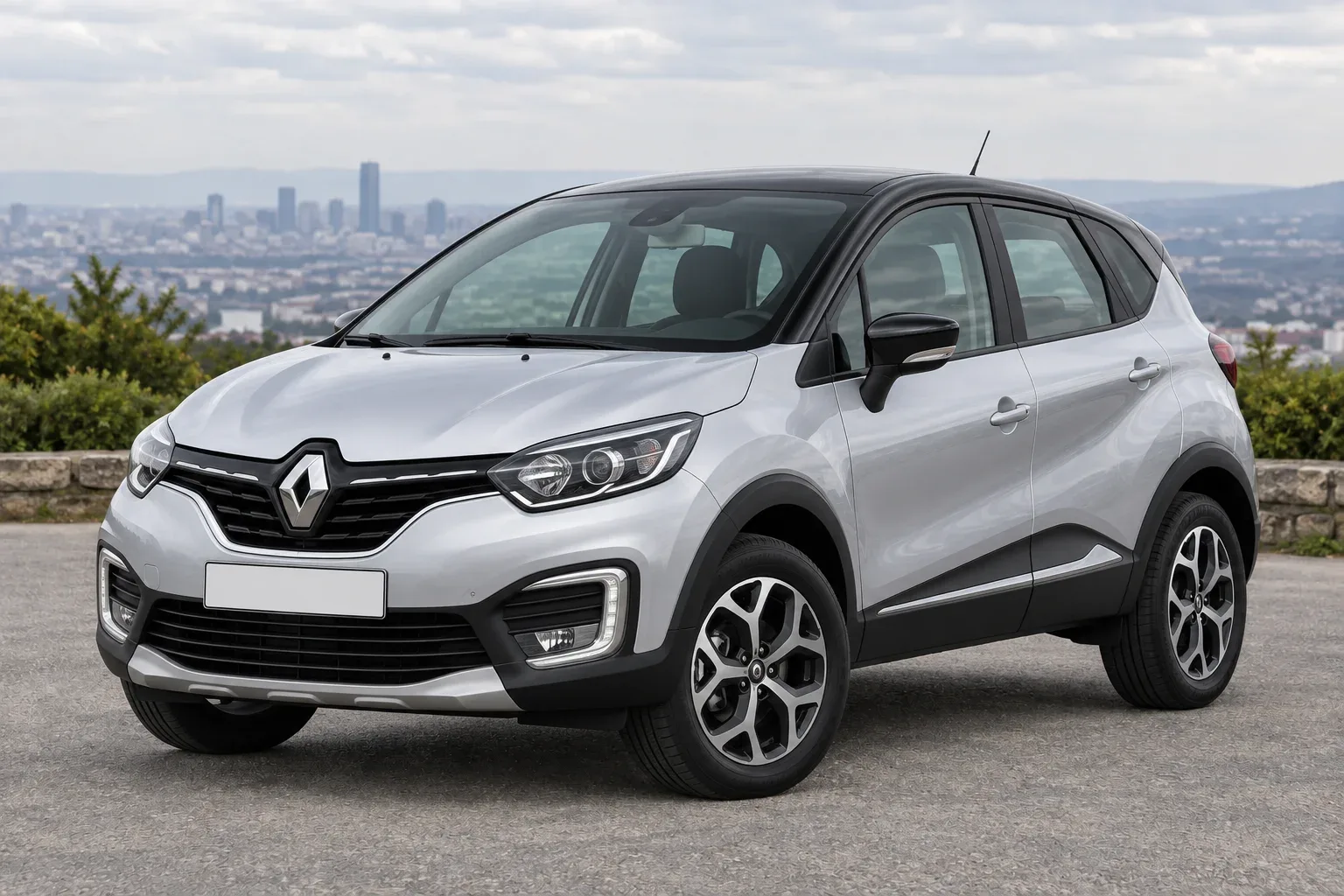
Renault Captur was introduced in March 2016. It was designed specifically for Russia, taking into account the features of operation. Stylists tried to emphasize the off-road capabilities and practicality of the car.
The silhouette and the back of the Kaptur resemble the European Captur. However, the front part is different (hood, headlights and bumper).
There's a noticeable difference in size. The Russian version is longer by 211 mm, wider by 35 mm and 47 mm higher. The wheelbase is 68 mm larger and is 2,674 mm, which is almost completely consistent with the Renault Duster base. This is easily explained by the fact that the European Captur was created on the Renault Clio platform, and the Russian Kaptur – on the B0 platform, which formed the basis of the first Duster.
The interior design of the Russian version is similar to the European Captur. The trunk offers a volume of 387 liters, and with the rear seats folded down - 1200 liters.
The crossover was going to the Moscow factory Renault. In addition to Russia, this model was offered in Belarus and Kazakhstan.
After restyling, Kaptur in 2020 switched to a modernized version of the B0 platform used in Arkan. Internal and external changes are minor.
Engines
Under the hood of the crossover, you can find only gasoline engines.
The base 1.6 return 114 hp (H4M) is well known from other models of the brand. The engine was developed by Nissan in 2005 (HR16DE). valve timing drive is chain drive. Since 2015, the engine was assembled in Togliatti. It has no characteristic faults.
2-liter unit (F4R), developing 143 hp - a descendant of its own development of the French late 90s. The gas distribution mechanism is driven by a gear belt, which must be renewed every 60,000 km. The cost of the original set is 16 000 rubles, and the substitute - from 6000 rubles.
The engine does not cause any serious problems. Only sometimes it was necessary to clean the throttle, change the oede of the phase regulator sensor (200-1300 rubles), and the valve ventilation of crankcase gases (1-6 thousand rubles).
Among the common problems, it is possible to note the failures in the operation of the oxygen sensor - more often than the first (2-8 thousand rubles).
In the updated version of the Kaptur, instead of a 2-liter atmospheric, a 150-horsepower turbo engine with a volume of 1.33 liters began to be used. It is a joint product of Renault (HR13DDT) and Mercedes (M282). The gas distribution mechanism here is chain-driven. Information about how the engine manifested itself under the hood of Capture, so far very little.
Transmission
In addition to the manual transmission (5MT and 6MT), automatic was also provided: a variator for 1.6 and an automatic for 2.0.
After the restyling, the machine was no longer offered. Mechanics (5MT) remained available exclusively with an atmospheric 1.6. The turbocharged 1.33 TCe was only paired with the CVT.
The 4-band DP8 is an advanced version of the DP0 (AL4) for all-wheel drive vehicles.
The box is well known for its use in many Renault, Peugeot and Citroën models. Serious problems usually do not cause. After 100,000 km of mileage, only electromagnetic valves may require attention. The cost of updating the solenoid will be more than 15 000 rubles.
In the case of Captur, it is necessary to take into account isolated cases of failure of the machine due to the destruction of the locking ring. Unique incidents were recorded closer to 100,000 km of run. The cost of repairs from 50 to 130 thousand rubles.
The 1.6 version used the Jatco JF015E. Restyled samples in a pair of turbo engines received an updated Jatco JF016E variator. The improvements affected - the hydraulic transformer, hydraulics and the control program. A separate cooling radiator was also installed.
Both variators were widely used in Renault, Nissan and Mitsubishi cars.
I've had problems with the variator. Not often, though. The cost of repairs was about 120-140 thousand rubles. With timely update of the transmission fluid (8-12 thousand rubles), there are cases when the variator did without serious repairs over 200-250 thousand km.
All-wheel drive system
All-wheel drive was available only for Capturs with a 2-liter engine, and after restyling - for turbocharged with 1.33 TCe.
The all-wheel drive system with the electromagnetic clutch GKN after the upgrade has not undergone modernization. The transmission units are reliable, problems usually do not deliver.
After 100,000 km of attention, sometimes only the driveshaft may require due to wear of the crosses or the suspension bearing (vibration is felt). The cost of complete repairs is about 22 000 rubles.
Walking
On the rear axis of the front-wheel drive versions, a twisting beam is installed, and on all-wheel drive - an independent multi-particle. In front, McPherson.
In cars with a 2-liter engine in the steering used hydraulic power steering, and with a base 1.6 - electrohydraulic. After restyling, all versions received an electromechanical amplifier.
The suspension parts are pretty hardy. Only the front stabilizer racks (500-2200 rubles) can be knocked after 30-60 thousand km of run.
The hubs of the stabilizer (500-1000 rubles) run over 60-100 thousand km. When replacing some owners, there was an interesting surprise. A number of cars since 2017 received a front stabilizer of transverse stability with vulcanized bushings. This combination involves replacing bushings only in the collection with a stabilizer (35,000 rubles). However, in a third-party service by a small modification of the design of the bushings can make removable.
Silent blocks and ball supports of the front levers, for the most part, serve more than 100-150 thousand km. The original lever in the collection will give for 27 000 rubles. The design allows you to change all the elements separately (1200 rubles - Silentblock and 2-3 thousand rubles - ball).
The back suspension silencing blocks are even more tenacious.
Staff rear shock absorbers (2-8 thousand rubles) often began to leak on the segment of 50-100 thousand km. Front shock absorbers (3-8 thousand rubles) only sometimes remind of themselves after 100,000 km.
Other problems and malfunctions
After 2-5 years, and then found the swelling of paintwork on the trunk lid. The defect was more often observed near the chrome pad above the registration plate. The cover had to be repainted - either under warranty or on its own.
Just under 80,000 vehicles assembled after September 2015 were subject to recall. Due to a design miscalculation, there was a possibility of breaking the lock loop and opening the hood on the move. The hood loop was to be replaced.
Often in the heat caused complaints of the air conditioning system. As soon as the cabin began to receive cool air, as soon as the compressor turned off. The reason is a temperature sensor that prevents the evaporator from freezing. Simple-looking sensor in the original is available for an unthinkable 14,000 rubles. It is much cheaper to replace the sensor thermistor, sold in the store of radio parts for 20-50 rubles.
In other cases, a loss of tightness of the tube of the air conditioning system was found (from 10 000 rubles).
In all-wheel drive Captures of the first years of production after 50-100 thousand km, sometimes a geared ring located on the outer SRUS rear axle burst. This led to the disconnection of ABS, CAP and all-wheel drive systems. The ring was later reinforced and the problem did not recur. The original part is available only in the collection with a semi-axle (25,000 rubles). On the Internet you can find a toothed ring of third-party manufacturers (about 1000 rubles).
3Pre-purchase checklist
Engines
- Since 2015, the engine was assembled in Togliatti. It has no characteristic faults.
- The gas distribution mechanism is driven by a gear belt, which must be renewed every 60,000 km.
- The engine does not cause any serious problems.
- Among the common problems, it is possible to note the failures in the operation of the oxygen sensor - more often than the first (2-8 thousand rubles).
Transmission
- Serious problems usually do not cause.
- After 100,000 km of mileage, only electromagnetic valves may require attention.
- The cost of repairs from 50 to 130 thousand rubles.
- I've had problems with the variator. Not often, though.
- The cost of repairs was about 120-140 thousand rubles.
- There are cases when the variator did without serious repairs over 200-250 thousand km.
All-wheel drive system
- The all-wheel drive system with the electromagnetic clutch GKN after the upgrade has not undergone modernization.
- The transmission units are reliable, problems usually do not deliver.
- After 100,000 km of attention, sometimes only the driveshaft may require due to wear of the crosses or the suspension bearing (vibration is felt).
- The cost of complete repairs is about 22 000 rubles.
Other problems and malfunctions
- In other cases, a loss of tightness of the tube of the air conditioning system was found (from 10 000 rubles).
- The ring was later reinforced and the problem did not recur.
4Challenges of selling privately
The pre-styled Renault Captur is undoubtedly worth noting as a relatively trouble-free car. Even the CVT does not cause numerous problems, and according to the experience of operation in other models, it is quite capable of serving 200,000 km. However, if you want to have a two-pedal version, it is better to pay attention to the 2-liter versions with the machine.
For the restyling Kaptur information is accumulated little. In the long term, a version with an atmospheric gasoline engine of 1.6 liters is more preferable.
- Overview: Renault Captur was unveiled in March 2016.
- Engines: Since 2015, the engine was assembled in Togliatti. It has no characteristic faults.
- Transmission: There are usually no serious problems.
- Chasing: On the rear axle of the front-wheel drive versions, a twisting beam is installed, and on all-wheel drive - an independent multi-particle. In front, McPherson.
- Other problems and malfunctions: In other cases, a loss of tightness of the tube of the air conditioning system (from 10 000 rubles) was found.
Shows, bargaining and re-registration take time: buyers look, promise to think and disappear. Fair price after inspection closes the auction on the spot. If money is needed urgently, the purchase takes away waiting and repeat displays.
5How selling to us works
Leave a request with the car data. We will discuss the preliminary assessment and inspection. After checking the status and documents, we agree on the final price and terms of the transaction.